Planning a Sunrise Hike: Timing, Light, and What Happens Minute by Minute
Find the light for your next day outdoors
Choose a place and an optional date for sunrise, sunset, golden hour, and twilight. Leave the date blank for today.
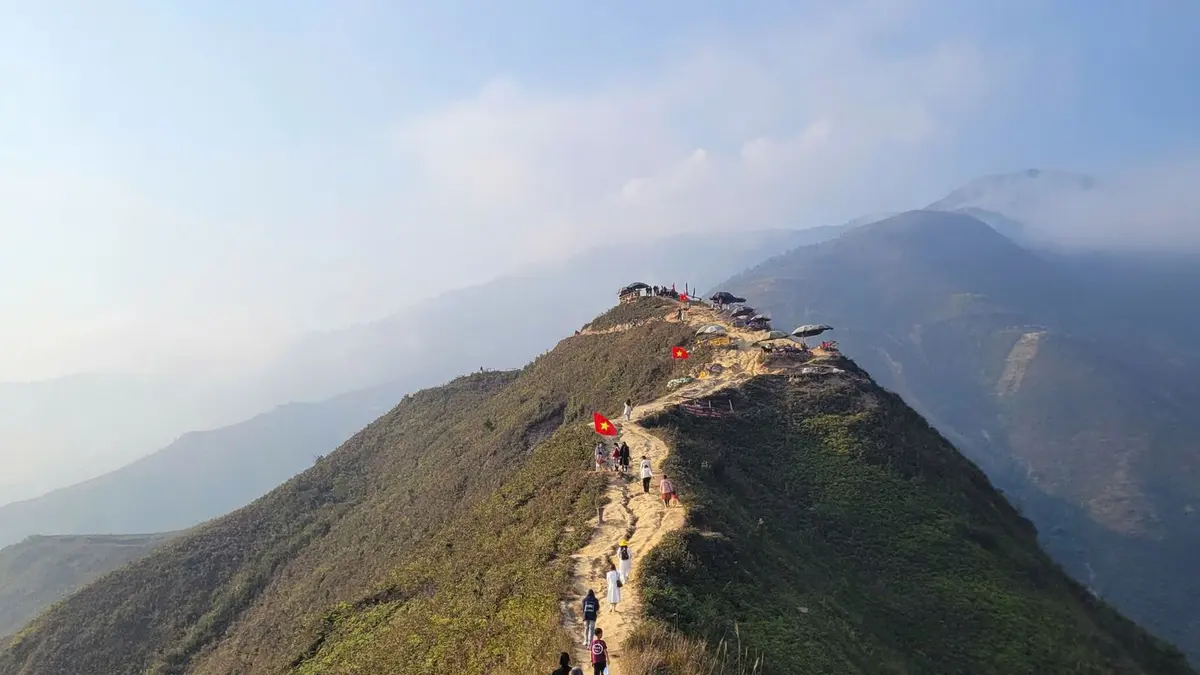
Most sunrise hikes fail at the planning stage, not on the trail. People look up the sunrise time, subtract their hiking time, and set an alarm — then arrive at the viewpoint just as the sun clears the horizon and wonder why the photos everyone else posts look nothing like what they saw. The problem is that “sunrise” is the end of the show, not the beginning. The richest color in the sky often happens 15 to 30 minutes before the sun appears, while it is still below the horizon lighting the undersides of clouds.
Planning a sunrise hike well means understanding the sequence of light that unfolds in the hour before sunrise: when the sky first glows, when you can turn your headlamp off, when the color peaks, and what happens after the sun is up. That sequence is predictable — it follows the same twilight phases every morning — which means you can build a reliable timeline for any trail, any season, anywhere in the country.
Work Backwards From Sunrise, Then Back Up Some More
The single most useful rule: plan to be at your viewpoint 30 to 40 minutes before the published sunrise time, not at sunrise. There are two reasons.
First, the color. When the sun is a few degrees below the horizon, its light travels a long, low path through the atmosphere and strikes clouds from underneath. High and mid-level clouds turn pink, orange, and red during this window — and on many mornings the display peaks well before the sun itself appears. Once the sun crosses the horizon, direct light washes out the subtler tones. Arrive exactly at sunrise and you may have missed the best ten minutes of the morning.
Second, the buffer. Trails take longer in the dark — a route you can hike in 75 minutes in daylight can easily take 90 before dawn, between careful footing and navigation checks. So the working formula looks like this: take the sunrise time, subtract 35 minutes for your target arrival, subtract your daylight hiking time plus about 20 percent, subtract 10 to 15 minutes for the trailhead ritual, and then subtract your drive. What’s left is your alarm time. It is usually earlier than you hoped.
The Light Sequence on the Trail
The hour-plus before sunrise divides into three twilight phases, and each one feels distinctly different underfoot. If you know the phase boundaries for your date and location, you know almost exactly what the trail will look like at any point in your hike. For the full definitions, see our guide to civil, nautical, and astronomical twilight.
Astronomical twilight (sun 12° to 18° below the horizon) is functionally night. The sky directly overhead is still dark enough for stars, and there may be only the faintest suggestion of gray in the east. On the trail, this is full headlamp territory — you are hiking by lamplight, period.
Nautical twilight (sun 6° to 12° below) is when the horizon becomes visible as a distinct line and the eastern sky takes on real color. In open terrain you can begin to sense the landscape, and toward the end of this phase you might manage a wide, smooth trail without a lamp. But under forest canopy or in a canyon, it is still dark. This is the phase where people most often misjudge the light: the sky looks promising, the ground does not.
Civil twilight begins when the sun is 6° below the horizon — roughly 30 minutes before sunrise at mid-latitudes — and this is when the world genuinely turns on. On open trail you can hike safely without a headlamp, read a map, and see terrain features clearly. The caveat again is cover: a dense forest or a north-facing gully can stay headlamp-dark for another 15 or 20 minutes after open ground is fine, so if your route climbs through trees, plan on using the lamp until you clear the canopy.
A practical rule of thumb for mid-latitude US hikers: headlamp mandatory until about 45 minutes before sunrise, headlamp optional on open trail from about 30 minutes before, and full working light by 15 minutes before.
How Much Earlier Is “First Light”?
“First light” is a fuzzy term, but if you take it to mean the beginning of civil twilight — the point where open-country hiking without a lamp becomes reasonable — the gap between first light and sunrise depends on latitude and season.
At mid-latitudes (roughly the band from Atlanta to Minneapolis), civil twilight lasts about 26 to 33 minutes, shortest near the equinoxes and longest near the solstices. Farther south it is shorter: Miami’s civil twilight runs a fairly consistent 21 to 24 minutes year-round, because the sun crosses the horizon at a steeper angle. Farther north it stretches out: Seattle’s June civil twilight lasts around 40 minutes, and in Fairbanks in midsummer twilight never ends at all.
The earlier phases scale the same way. At 40°N in spring or fall, nautical twilight begins about an hour before sunrise and astronomical twilight about 90 minutes before. In June at the same latitude, those numbers stretch to roughly 70 and 110 minutes. If you want to hike the entire approach in darkness and catch the full progression from stars to sun, that is the window you are working with.
You Don’t Need an East-Facing View
A common assumption is that a sunrise hike requires a viewpoint looking east. It doesn’t — and some of the best sunrise displays happen behind you.
When the rising sun’s first direct rays hit high terrain, they paint it in the warm pink-orange glow climbers call alpenglow — and that light lands on slopes facing east, which means you see it best by looking west. A viewpoint facing a wall of peaks to the west can deliver a more dramatic sunrise than staring into the sun itself: the summits catch fire from the top down while the valleys stay in blue shadow. Hikers in the Colorado Front Range, the Tetons, and the eastern Sierra know this well — the classic shot is the range lit up, not the sun.
The western sky before sunrise also hosts the Belt of Venus: a band of pink above the blue-gray arc of Earth’s own shadow, sinking as the sun climbs. If your only options face west, don’t cancel the trip. Turn around.
Seasonal Strategy
Sunrise timing swings enormously through the year, and it changes what kind of trip you’re signing up for. Our overview of how sunrise and sunset times change throughout the year covers the mechanics; here is what it means for hikers.
Winter sunrises are a bargain. In late December, the sun rises around 7:20 a.m. in New York, 7:15 in Chicago, and 7:20 in Denver. Add civil twilight and you can sleep until 5:30, hike a short approach, and be home by mid-morning. Cold is the tradeoff, but the timing is civilized, and winter air is often exceptionally clear.
June sunrises are brutal. At mid-latitudes the earliest sunrises of the year land in mid-June at roughly 5:00 to 5:30 a.m. — about 5:07 in Boston, 5:15 in Chicago, 5:31 in Denver. Work backwards from a 5:15 sunrise with a 90-minute approach and you are setting an alarm near 2:45 a.m. Summer sunrise hikes are absolutely worth doing, but treat them as an event, not a casual outing.
Spring and fall are the sweet spot for most people: sunrises in the 6:00 to 7:00 a.m. range, moderate temperatures, and — in many regions — more interesting cloud decks than midsummer’s clear or hazy skies.
Safety: What’s Different Before Dawn
A few realities of the pre-dawn hours deserve respect.
Carry a headlamp even for a “civil twilight” start. Plans slip, trailheads are farther than the map suggested, and forest sections stay dark. A headlamp weighs a few ounces; hiking rocky trail by phone flashlight is how ankles get rolled.
The coldest moment of the day is right around sunrise. The ground loses heat all night by radiation, and temperatures keep falling until incoming sunlight finally outpaces the loss — which happens at or shortly after sunrise, not at midnight. Summit temperatures at your arrival will typically be the day’s minimum, often with wind. Bring a warmer layer than the forecast suggests; you will be standing still at the coldest, most exposed point of the route.
Dawn is rush hour for wildlife. Deer, elk, moose, and — in much of the West — bears and mountain lions are most active around dawn and dusk. Make occasional noise on blind corners, keep dogs leashed, and know the local guidance for the animals in your area.
Tell someone your plan. Trailheads are empty before dawn, and cell coverage in the mountains is unreliable. Leave your route and expected return time with someone who will notice if you don’t check in.
A Worked Example: 90 Minutes to a Viewpoint
Suppose sunrise is at 6:45 a.m., your viewpoint is a 90-minute hike in daylight, the trail starts in forest and opens up for the final stretch, and the trailhead is a 30-minute drive away. Here is a realistic timeline:
| Time | Event |
|---|---|
| 3:55 a.m. | Alarm. Coffee, layers, pack check. |
| 4:30 a.m. | Leave home. |
| 5:00 a.m. | Trailhead. Boots on, headlamp on, start hiking by 5:10. |
| 5:35 a.m. | Nautical twilight underway; horizon visible in clearings, forest still dark. |
| 6:15 a.m. | Civil twilight; lamp off as you break out of the trees. |
| 6:20 a.m. | Arrive at viewpoint — 25 minutes before sunrise. |
| 6:20–6:40 a.m. | Peak pre-sunrise color on clouds; alpenglow starting on western peaks. |
| 6:45 a.m. | Sunrise. |
| 6:45–7:30 a.m. | Golden hour — low, warm light for photos and the descent. |
Note the built-in slack: 110 minutes of hiking time for a 90-minute route, and an arrival comfortably inside the color window. The hour after sunrise is a reward in itself — see our golden hour photography guide for making the most of it on the walk down.
Why Sunrise Often Beats Sunset
If the light sequence is roughly symmetric, why bother with the alarm clock? Two practical reasons.
Solitude. Popular viewpoints that draw crowds at sunset are frequently empty at dawn. The effort barrier is the filter — and it works in your favor.
Calmer, more stable conditions in many regions. Overnight cooling tends to still the air, so mornings often bring lighter winds and smoother atmospheric conditions than evenings, when a full day of surface heating has stirred up thermals and gusty winds. In the summer Rockies and desert Southwest, convective thunderstorms build through the afternoon, making morning decisively the safer window on exposed terrain. This is a tendency, not a law — coastal fog, valley inversions, and marine layers all follow their own local schedules — so check the patterns where you hike.
There is one more benefit that has nothing to do with the view: bright light shortly after waking is one of the strongest signals you can send your circadian system, as we cover in morning light and your body clock. A sunrise hike stacks the payoff — the show at the top, and a well-anchored body clock for days afterward.
Set the alarm 40 minutes earlier than feels necessary. That margin is the difference between watching the sky ignite from the summit and watching it through the trees on the way up.