Dawn, Dusk, and Legal Light: How Anglers and Hunters Use Sunrise and Sunset Times
Find the light for your next day outdoors
Choose a place and an optional date for sunrise, sunset, golden hour, and twilight. Leave the date blank for today.
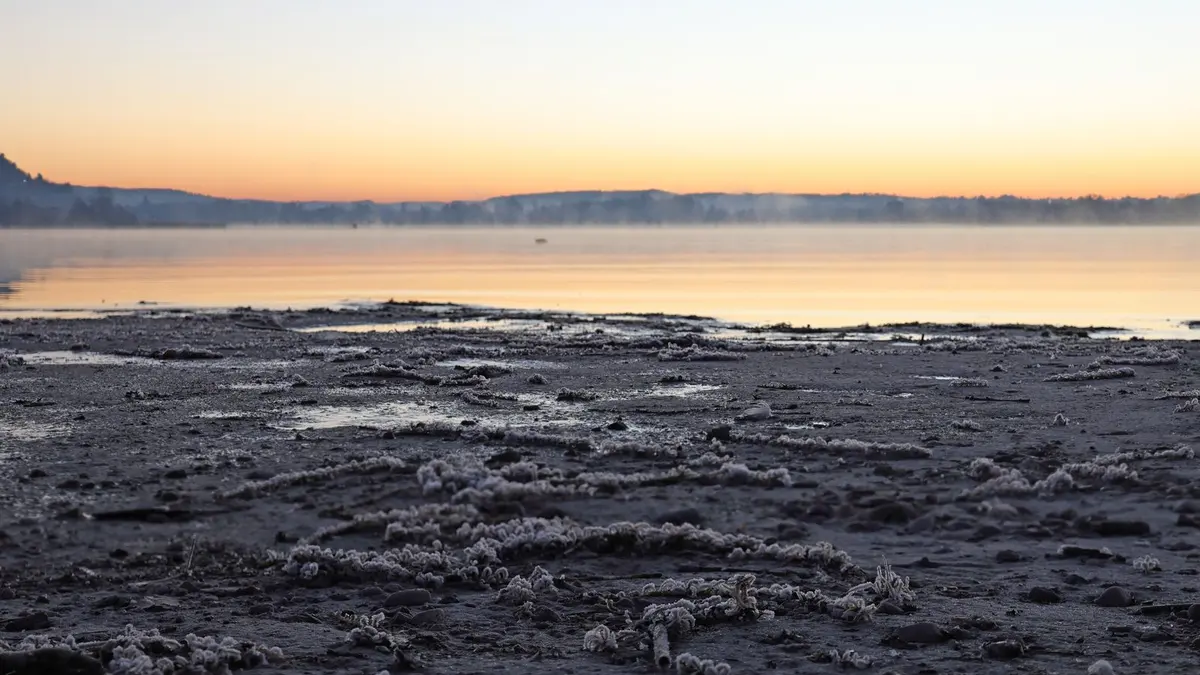
Ask any experienced angler or hunter when they set their alarm, and the answer almost always traces back to one number: sunrise. Dawn and dusk are the two most productive windows of the day for most fish and game species, and they’re also the anchor points for legal shooting hours in many states. Knowing exactly when the sun rises and sets at your spot — not at the nearest big city, and not from a vague memory of last month’s times — is one of the simplest edges you can give yourself outdoors.
This guide covers why those low-light windows matter biologically, how “legal light” relates to (but differs from) sunrise and sunset, and how to plan around twilight so you’re set up and ready when the action starts.
Why Dawn and Dusk Are Prime Time
The pattern is old, well documented, and consistent across a huge range of species: activity peaks around sunrise and sunset. Biologists call animals with this rhythm crepuscular — most active in twilight — and the list includes whitetail deer, wild turkey (on the roost-to-ground transitions), rabbits, many waterfowl, and a long roster of gamefish from largemouth bass to walleye and trout.
A few well-established reasons drive the pattern:
Low light favors predators — and feeding
Many fish are ambush or pursuit predators, and low light tilts the odds in their favor. Baitfish are harder pressed to spot an approaching bass or walleye in dim water, so predators feed more aggressively at dawn and dusk than under bright midday sun. Walleye in particular are famous for their low-light eyesight advantage. For prey species on land, twilight offers a compromise: enough light to move and feed, but enough darkness to reduce exposure to daytime predators.
Temperature swings
In warm seasons, dawn is the coolest part of the day. Fish in shallow water are more comfortable and more willing to chase before the sun heats the surface; deer and other mammals move more freely before midday heat pushes them into bedded cover. In the evening, cooling temperatures trigger the same behavior in reverse. Midday activity tends to be lowest exactly when temperatures peak.
Transition behavior
Dawn and dusk are commute hours in the animal world. Deer move between nighttime feeding areas and daytime bedding cover around first and last light. Waterfowl trade between roosting water and feeding fields at those same edges of the day. Insects hatch heavily at dusk on many waters, pulling trout and panfish into visible feeding. If you want to intercept animals moving, you position yourself along those transitions — which means being in place before the light changes, not during it.
None of this is exotic science. It’s the accumulated, repeatedly confirmed observation behind the oldest advice in the outdoors: be there at first light, stay until last light.
Sunrise Time vs. “Legal Shooting Light”
Here’s where sun times stop being just a tactical tool and start touching the law. In many U.S. states, legal shooting hours for common game species are defined as a window built around sunrise and sunset — a very common formulation is 30 minutes before sunrise to 30 minutes after sunset. That extra half hour on each end exists because there’s genuinely usable light before the sun crests the horizon and after it drops below it.
But — and this cannot be stressed enough — that framework is not universal, and this site is not a legal reference.
Shooting-hour rules vary by:
- State. Some states use the 30-minute convention; others use different offsets, sunrise-to-sunset only, or fixed printed tables. A rule you learned hunting one state may simply not apply across the border.
- Species. Waterfowl and other migratory birds are governed by federal frameworks with their own hour definitions, and these often differ from the hours for deer or small game in the same state. Turkey hours frequently differ again. Some furbearer or predator seasons allow nighttime hunting under specific conditions.
- Season and zone. Special seasons, youth hunts, and particular management zones can carry their own hours.
- Year. Regulations change. What was true two seasons ago may not be true now.
Always check your state wildlife agency’s current regulations for the exact species, season, zone, and dates you’re hunting. The sunrise and sunset times on todaysuntimes.com are astronomical calculations meant for planning — they tell you when the sun crosses the horizon at your location, not what the law permits you to do. When your regulations booklet and a calculated time disagree, the booklet (or the agency’s official table) is what a game warden will hold you to.
Where Civil Twilight Fits In
If you’ve wondered why “30 minutes before sunrise” is such a common convention, look at civil twilight. Civil twilight is the period when the sun is between 0° and 6° below the horizon — bright enough, on a clear morning, to see and do ordinary outdoor tasks without artificial light. It’s the same window that many jurisdictions use for rules like when drivers must turn on headlights.
At mid-latitudes in the continental U.S., civil twilight typically lasts somewhere in the neighborhood of 25 to 35 minutes, which is why a 30-minute buffer around sunrise and sunset roughly maps onto it: legal shooting light, where that convention applies, approximately spans civil dawn to civil dusk. The idea is that within civil twilight there’s enough natural light to identify a target responsibly.
The mapping is only approximate, though. Civil twilight’s actual duration changes with latitude and season — longer in summer and at northern latitudes, shorter in winter and toward the equator — while a legal 30-minute offset is fixed. In midsummer in a northern state, civil dawn may begin well more than 30 minutes before sunrise; in that case usable light arrives before legal light does, and you still have to wait. For a full breakdown of civil, nautical, and astronomical twilight and how each is defined, see our guide to the three types of twilight.
For anglers, there’s no legal window to worry about in most cases (night fishing is broadly legal, though local waters can have their own rules), but civil twilight is still the practical definition of the dawn and dusk “bite windows” — it’s the stretch when light levels are changing fastest, and fast-changing light is what triggers feeding activity.
Why the Regulations Booklet Differs From Your Calculated Time
A question that comes up constantly: “The state’s sunrise table says 6:42, but the calculated time for my town says 6:37. Which is right?”
Usually, both are — for slightly different places. Sunrise is a local event. The sun rises earlier on the eastern edge of a state than on the western edge, by roughly four minutes for every degree of longitude. State agencies can’t print a table for every township, so regulation booklets typically publish times computed for one reference city per zone (often the capital or a major city), sometimes with instructions to add or subtract minutes based on where you are in the state. Elevation and the flat-horizon assumption in standard calculations can add small differences too.
So a calculated city-center time — say, looking up Madison, Wisconsin rather than using a statewide table — will often differ from the booklet by a few minutes. That local baseline is useful for planning, but it cannot tell you when terrain blocks the light at your stand or boat launch. For legal compliance, the state’s official table controls where one is published. If your state prints official shooting-hour tables, use it for the legal question. When in doubt, take the conservative side of any discrepancy: wait the extra few minutes in the morning and quit a few minutes early in the evening.
Planning Your Outing Around the Light
Work backward from first light, not sunrise
If legal light or the peak bite starts 30 minutes before sunrise, your setup needs to be finished before that. Add walking time in the dark, boat launch and idle time, decoy setting, or tree-stand climbs, and a 6:30 sunrise can easily mean a 4:45 departure. Look up tomorrow’s calculated city-center times the night before — a page like Houston, Texas shows sunrise, sunset, and twilight for the selected date — then build the schedule backward from civil dawn and add a terrain and safety margin.
Factor in how twilight length changes with the season
The gap between first usable light and sunrise is not constant. It stretches in summer and shrinks in winter, and it lengthens as you go north. A hunter used to October twilight in Georgia will find the November light curve in Minnesota behaves differently. Check the twilight times for your actual dates rather than assuming last month’s rhythm still holds.
Weather bends the windows
Heavy overcast delays usable morning light and brings evening darkness sooner, effectively compressing your window even though the clock times don’t change. Clear, calm mornings do the opposite. The calculated times are your framework; the sky on the day fine-tunes it.
Moon phase and solunar theory: what’s actually known
You’ll hear confident claims that fish and game feed hardest on the new moon, or the full moon, or during “solunar major periods” when the moon is overhead or underfoot. Solunar theory — popularized in the 1930s and still printed in many hunting and fishing almanacs — predicts daily activity peaks from the moon’s position.
Honest assessment: it remains popular but scientifically unvalidated. Rigorous attempts to confirm solunar predictions have produced mixed and inconsistent results, and no controlled body of evidence establishes that solunar tables reliably predict feeding activity. What is well established is more modest: moonlight affects nighttime visibility and therefore can shift when nocturnal and crepuscular animals move, and the moon drives tides, which genuinely dominate feeding patterns in saltwater. If solunar tables help you pick a weekend and get you outside, no harm done — but don’t skip a dawn because a table rated it poorly. The sun-driven dawn and dusk windows are the pattern with the strongest track record behind it.
The Bottom Line
Dawn and dusk concentrate more animal activity into less time than any other part of the day, and in many states they also bracket the legal window in which you’re allowed to hunt. Treat the two ideas separately: use precise, location-specific sunrise, sunset, and civil twilight times to plan when to leave, when to be set up, and when the action is likely — and use your state’s current official regulations, and only those, to determine when you may legally shoot. Check the times the night before, arrive earlier than feels necessary, and let the light do what it has always done.