Understanding Twilight: Civil, Nautical, and Astronomical Phases Explained
See what this means where you live
Choose a place and an optional date for sunrise, sunset, golden hour, and twilight. Leave the date blank for today.
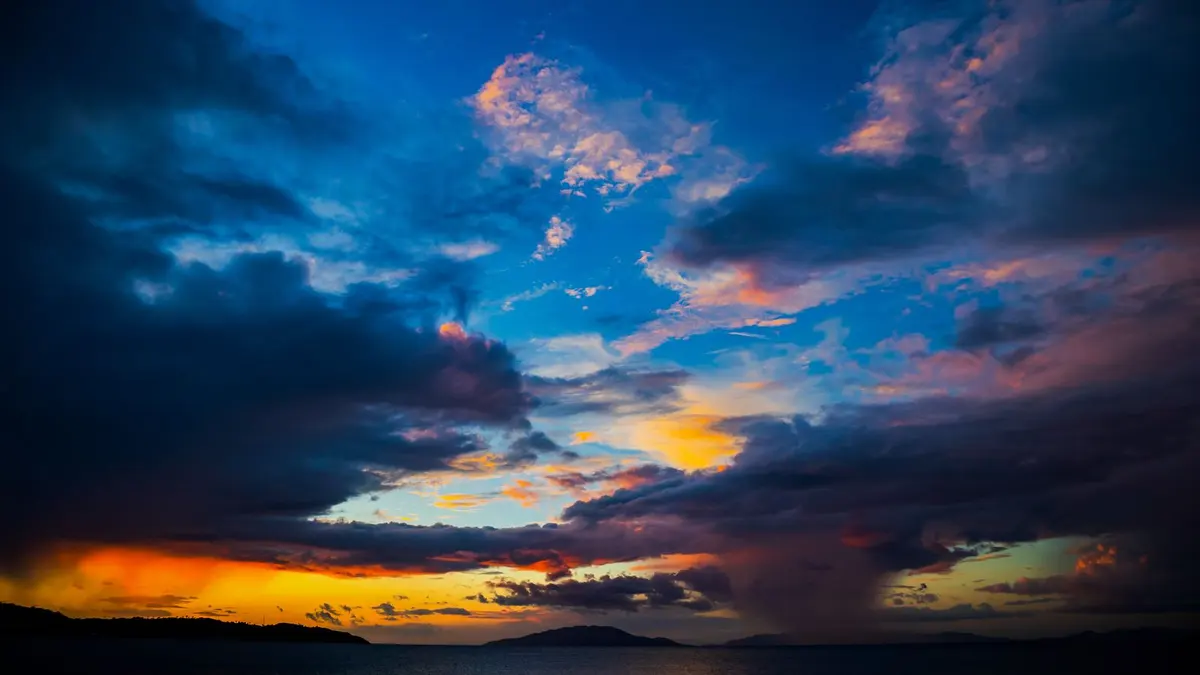
Twilight is the transition period between daylight and darkness — but it isn’t a single event. Astronomers divide twilight into three distinct phases based on how far the sun is below the horizon: civil twilight, nautical twilight, and astronomical twilight. Each phase has a specific scientific definition and practical significance for different activities. Understanding these phases gives you a more precise picture of usable light than simply knowing the sunrise or sunset time.
How Twilight Is Defined
Twilight occurs because even after the sun drops below the horizon, its light still illuminates the upper atmosphere. This scattered light reaches the ground as a gradually dimming glow. The three twilight phases are defined by the sun’s angle below the horizon, measured in degrees:
- Civil twilight: Sun is 0° to 6° below the horizon.
- Nautical twilight: Sun is 6° to 12° below the horizon.
- Astronomical twilight: Sun is 12° to 18° below the horizon.
Each phase occurs twice daily — once in the morning (before sunrise) and once in the evening (after sunset). Morning twilight phases progress in reverse order: astronomical twilight begins first, then nautical, then civil, and finally the sun rises. Evening twilight follows the forward order: civil first, then nautical, then astronomical, and finally full night.
Civil Twilight
Definition
Civil twilight is the brightest phase of twilight. It begins at sunset (evening) or ends at sunrise (morning) and lasts until the sun is 6° below the horizon.
What It Looks Like
During civil twilight, there is still enough ambient light for most outdoor activities without artificial lighting. The sky near the horizon often displays vivid colors — oranges, pinks, and purples in the evening, or soft pastels in the morning. The opposite horizon gradually deepens to a darker blue. The brightest planets and stars (Venus, Jupiter, Sirius) may become visible toward the end of civil twilight, but most stars are not yet visible.
Who Uses It
Pilots and aviation. Civil twilight is a critical concept in aviation. The Federal Aviation Administration (FAA) uses civil twilight to determine when pilots must switch between daytime and nighttime flight rules. Specifically, the period from the end of evening civil twilight to the beginning of morning civil twilight is legally considered “night” for flight regulations. Aircraft lighting requirements, minimum visibility rules, and pilot certification requirements all change at the civil twilight boundary.
Drivers and commuters. Civil twilight roughly defines the period when you can see well enough to drive without headlights, though most traffic laws require headlights to be on at or before sunset. During civil twilight, visibility is generally adequate for navigation on roads, but depth perception and the ability to spot pedestrians degrade as the phase progresses.
Outdoor workers. Construction, agriculture, and other outdoor industries often schedule work around civil twilight. There’s enough light to work safely, though detailed tasks become more difficult toward the end of the phase.
General public. When most people say “it’s getting dark,” they’re typically referring to the end of civil twilight. For everyday purposes, civil twilight defines the boundary between “still light enough” and “definitely getting dark.”
Duration
Civil twilight typically lasts 20–35 minutes at mid-latitudes in the US. Near the equator, it can be as short as 20 minutes because the sun drops more steeply below the horizon. At higher latitudes, the sun sets at a shallower angle, stretching civil twilight to 30 minutes or more. During summer at very high latitudes (above about 60°N), the sun may not drop more than 6° below the horizon, meaning civil twilight can last all night — this is the “white nights” phenomenon experienced in places like Anchorage during summer.
Nautical Twilight
Definition
Nautical twilight occurs when the sun is between 6° and 12° below the horizon. It begins where civil twilight ends (evening) or ends where civil twilight begins (morning).
What It Looks Like
During nautical twilight, the sky is noticeably darker than during civil twilight. The horizon line between sea and sky is still distinguishable — which is precisely where the name comes from. Many stars are now visible, and the brightest constellations become recognizable. The sky often transitions from deep blue near the zenith to a fading glow along the horizon where the sun has set.
Colors in the landscape largely disappear during nautical twilight. Your eyes begin adapting to low-light conditions, and objects at a distance become silhouettes rather than clearly defined shapes.
Who Uses It
Sailors and navigators. Nautical twilight has been important to marine navigation for centuries. During this phase, the horizon is still visible at sea while enough stars are present for celestial navigation — taking sextant readings to determine position. This dual visibility (horizon + stars) is unique to nautical twilight and makes it the optimal window for traditional celestial navigation.
Even with modern GPS, nautical twilight remains a defined term in maritime regulations. The U.S. Navy and Coast Guard reference nautical twilight for various operational parameters, including visibility requirements and lighting protocols.
Military operations. Military planning frequently references nautical twilight. The acronyms BMNT (Begin Morning Nautical Twilight) and EENT (End of Evening Nautical Twilight) appear in operational orders to define transitions between limited-visibility and darkness conditions. Ground operations, surveillance, and navigation timing are often keyed to nautical twilight boundaries.
Photographers. The transition from civil to nautical twilight is when blue hour occurs — a period of deep, saturated blue sky that contrasts beautifully with warm artificial lighting. Cityscapes, bridges, and architecture are often photographed during nautical twilight because the sky provides a rich blue backdrop rather than black void.
Duration
Nautical twilight typically lasts 25–35 minutes at mid-latitudes. Combined with civil twilight, you’re looking at roughly 50–70 minutes between sunset and the end of nautical twilight. At higher latitudes during summer, nautical twilight can merge with civil twilight into an extended dusk that never fully reaches astronomical twilight.
Astronomical Twilight
Definition
Astronomical twilight is the faintest phase. It occurs when the sun is between 12° and 18° below the horizon. Once the sun passes 18° below the horizon, full astronomical night begins — the sky is as dark as it can get from a solar perspective.
What It Looks Like
To the casual observer, astronomical twilight looks like night. The sky is dark, stars fill the visible sky, and the Milky Way may be faintly visible from dark locations. However, a subtle glow still lingers along the horizon where the sun has set. This residual glow, invisible to most people, is enough to interfere with sensitive astronomical observations.
During full astronomical night (sun more than 18° below the horizon), even this last trace of solar illumination is gone. The sky reaches maximum darkness, limited only by light pollution, airglow, and other non-solar sources.
Who Uses It
Astronomers. Astronomical twilight defines the boundary of serious observational astronomy. Professional and amateur astronomers plan their observing sessions around astronomical twilight because:
- Deep-sky objects (galaxies, nebulae, star clusters) are best observed during full astronomical night.
- Astrophotography requires the darkest possible skies — even faint twilight glow adds unwanted background gradient to long-exposure images.
- Telescope time at observatories is scheduled relative to astronomical twilight, not sunset.
The time between the end of evening astronomical twilight and the beginning of morning astronomical twilight defines the available “dark time” for observation on any given night.
Satellite observers. Satellites in low Earth orbit are often best observed during astronomical twilight because the satellite is still in sunlight (high enough to be illuminated) while the observer is in relative darkness. The International Space Station, Starlink trains, and other bright satellites are often most visible during this window.
Dark sky researchers. Scientists studying light pollution, nocturnal ecology, and the impact of artificial light use astronomical twilight as a reference point for natural baseline darkness. Light pollution measurements are most meaningful when compared against the natural darkness that would exist during astronomical night.
Duration
Astronomical twilight lasts 25–40 minutes at mid-latitudes. The total duration from sunset to full astronomical night is typically 75–100 minutes at mid-latitudes in the US.
At latitudes above roughly 48.5°N (Seattle, northern Montana, North Dakota), there are periods around the summer solstice when the sun never drops more than 18° below the horizon. This means astronomical twilight lasts all night — the sky never reaches full astronomical darkness. For about a month around the solstice, serious deep-sky astronomy becomes impossible at these latitudes.
Twilight Duration by Season and Latitude
The duration of each twilight phase varies with both the season and your geographic latitude. The key factor is the angle at which the sun’s path crosses the horizon:
- Near the equator: The sun sets nearly vertically, passing through each twilight zone quickly. Total twilight (all three phases) is about 70–80 minutes year-round.
- At mid-latitudes (30–45°N): The sun sets at a moderate angle. Total twilight ranges from about 75 minutes in equinox periods to 90+ minutes near the solstices.
- At high latitudes (50°N+): The sun sets at a very shallow angle, stretching each phase. Near the summer solstice, twilight phases can overlap or persist all night.
| Location | Latitude | Total Evening Twilight (Equinox) | Total Evening Twilight (Summer Solstice) |
|---|---|---|---|
| Miami, FL | 25.8°N | ~80 min | ~90 min |
| Denver, CO | 39.7°N | ~85 min | ~100 min |
| Seattle, WA | 47.6°N | ~95 min | Extends past midnight |
| Anchorage, AK | 61.2°N | ~110 min | No astronomical night |
Practical Applications
Planning Photography
If you’re a photographer, understanding twilight phases helps you plan beyond golden hour:
- Civil twilight is excellent for portraits with natural ambient light and for landscapes with vivid sky colors.
- Nautical twilight (blue hour) is ideal for cityscapes, architecture, and any scene mixing natural and artificial light.
- Astronomical twilight is the start of conditions suitable for night sky photography, star trails, and Milky Way shots.
Outdoor Safety
Hikers, climbers, and backpackers should plan return times around civil twilight. Once nautical twilight begins, trail navigation becomes significantly more difficult without a headlamp. Understanding how long twilight lasts at your latitude and time of year helps you gauge how much time you truly have after sunset.
Stargazing
Casual stargazers can begin identifying constellations and bright planets during nautical twilight. For serious deep-sky observation with a telescope, wait for the end of astronomical twilight. If you’re in a city with significant light pollution, the difference between nautical and astronomical twilight may be negligible for visual observation — but it matters greatly from a dark site.
Checking Twilight Times
You can look up all three twilight phases for any US city on todaysuntimes.com. Each city page shows the start and end of civil, nautical, and astronomical twilight for the current date, calculated in real-time from the city’s coordinates.
Common Misconceptions
“Twilight and dusk are the same thing.” Dusk generally refers to the end of evening twilight — the darkest point of the twilight period. Twilight is the entire transition. The term “dusk” is informal and can mean different things depending on context (civil dusk, nautical dusk, astronomical dusk).
“It gets dark right after sunset.” At mid-latitudes, there’s typically 25–30 minutes of civil twilight after sunset where visibility is still quite good. Full darkness doesn’t arrive for 75–100 minutes after sunset.
“Twilight is the same length everywhere.” Twilight duration varies significantly by latitude. A sunset in Honolulu and a sunset in Anchorage on the same date produce very different twilight experiences.
“The three phases are equally long.” They’re roughly similar at mid-latitudes (20–35 minutes each), but they diverge significantly at extreme latitudes, especially near the solstices.
Understanding the three phases of twilight transforms the period around sunrise and sunset from a vague “it’s getting dark” into a precisely defined progression with real-world significance for aviation, navigation, photography, astronomy, and everyday planning.