Sunset, Civil Twilight, and Night: How Pilots Use Sun Times
Find the light for your next day outdoors
Choose a place and an optional date for sunrise, sunset, golden hour, and twilight. Leave the date blank for today.
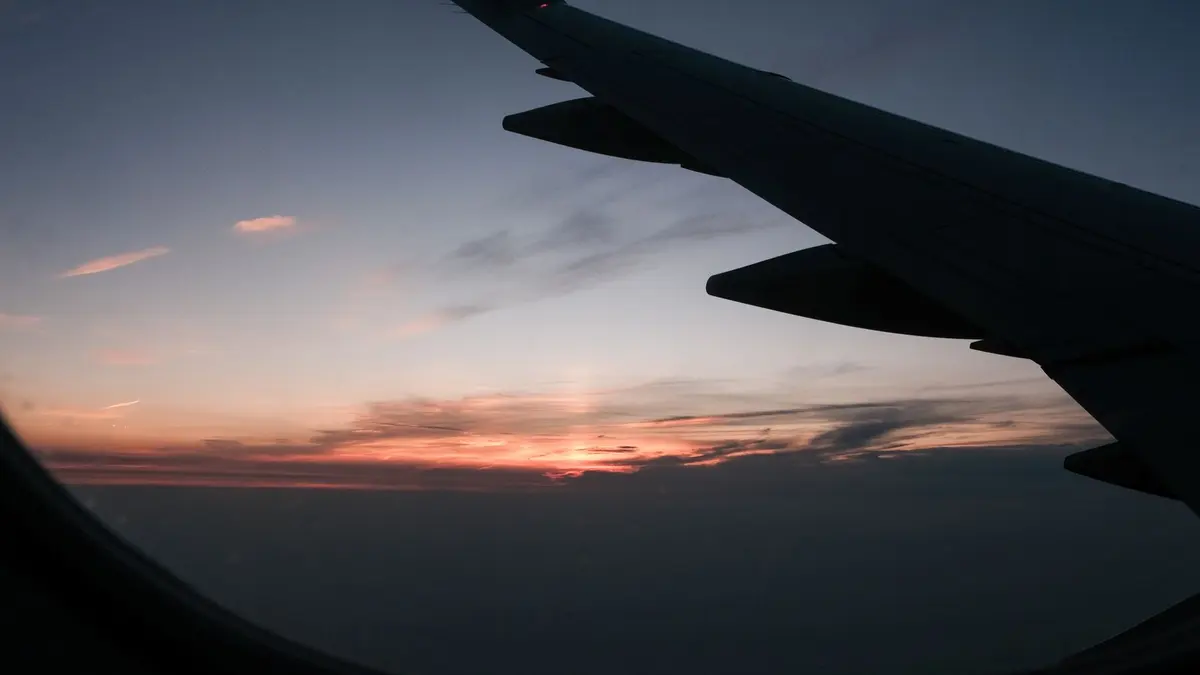
For most people, sunset times are a convenience. For pilots, they are regulatory triggers. Aviation is one of the very few fields where the astronomical definitions of sunset and twilight are written directly into federal law: cross a specific sun-angle boundary and different equipment requirements, logging rules, and pilot qualification requirements switch on.
What surprises most student pilots is that US regulations don’t contain one definition of “night” — they contain three, each anchored to a different moment in the evening. Aircraft lights come on at sunset. Loggable night time begins when evening civil twilight ends, roughly half an hour later at mid-latitudes. And the strictest standard — the recency requirement for carrying passengers at night — doesn’t begin until a full hour after sunset. On any given evening, a pilot passes through all three boundaries in sequence, and each one changes what the rules require.
This article walks through the three definitions, why the FAA hangs the legal definition of night on civil twilight rather than sunset, how dramatically the numbers shift between Miami and Fairbanks, and what all of it means for practical flight planning — including a note for drone pilots, whose rules borrow the same twilight boundary. One caveat up front: this is an educational summary, not flight guidance; the regulations themselves are the authority.
Three Boundaries, Three Rules
Here is the structure of a US evening as the Federal Aviation Regulations see it, in the order the boundaries arrive:
| Boundary | What changes | Regulation |
|---|---|---|
| Sunset | Position (navigation) lights must be on, until sunrise | 14 CFR 91.209 |
| End of evening civil twilight | ”Night” officially begins; flight time is loggable as night time | 14 CFR 1.1, 14 CFR 61.51 |
| 1 hour after sunset | Night takeoffs and landings count toward passenger-carrying currency | 14 CFR 61.57(b) |
In the morning the sequence runs in reverse: the currency window closes one hour before sunrise, legal night ends at the beginning of morning civil twilight, and position lights can come off at sunrise. Each rule deserves a closer look, because the differences are not accidents — each boundary matches the purpose of its rule.
Lights On: Sunset to Sunrise
The simplest rule is about being seen. Under 14 CFR 91.209, aircraft must display lighted position lights — the red light on the left wingtip, green on the right, white on the tail — from sunset to sunrise. (The regulation carves out a special formulation for Alaska, where at high latitude “sunset to sunrise” behaves strangely; there the requirement is tied to when a prominent unlighted object cannot be seen from 3 statute miles or the sun is more than 6 degrees below the horizon.)
Sunset is the right trigger for this rule because conspicuity degrades before darkness does. During civil twilight there is still plenty of light to fly by, but an airplane seen against a dimming sky or dark terrain becomes hard to spot much earlier than the ground becomes hard to see. Lights are cheap; the rule turns them on at the earliest sensible boundary.
Logging Night: The Civil Twilight Definition
The legal definition of night lives in 14 CFR 1.1, the definitions section of the regulations: night is the time between the end of evening civil twilight and the beginning of morning civil twilight, as published in the Air Almanac, converted to local time. When pilots log night flight time under 14 CFR 61.51 — toward certificates, ratings, and experience requirements — this is the definition that governs.
Note what that means on a normal evening: for roughly 20 to 40 minutes after sunset, a pilot is flying with position lights on but is not yet accumulating night time. The sun is down, the sky is colorful, and legally it is still day. Only when the sun reaches 6 degrees below the horizon — the end of civil twilight — does the logbook’s night column open.
The Air Almanac reference is not decorative. The regulation deliberately points to a published astronomical source rather than a pilot’s judgment about how dark it looks, which makes the boundary objective and checkable. In practice, modern pilots get the same civil twilight times from flight-planning software or online calculators, but the authoritative definition remains astronomical, not observational.
Night Currency: The One-Hour Buffer
The strictest boundary belongs to 14 CFR 61.57(b), the night recency-of-experience rule. To carry passengers during the period from one hour after sunset to one hour before sunrise, a pilot must have made, within the preceding 90 days, at least three takeoffs and three landings to a full stop during that same period, in the same category and class of aircraft.
Two details stand out. First, the landings must be to a full stop — touch-and-goes, which count for daytime currency, do not count at night, because the full landing rollout in darkness is part of the skill being exercised. Second, the window is defined by sunset plus an hour, not by civil twilight at all. That extra buffer pushes the currency requirement past twilight into genuine darkness: the FAA wants the qualifying takeoffs and landings, and the passenger-carrying they authorize, to occur when it is fully dark, not merely officially night.
So a pilot can log night time starting at the end of civil twilight, but landings made in that first stretch of “legal night” — between the end of twilight and one hour after sunset — do not count toward night currency. It is a genuinely three-tiered system, and examiners love asking about it.
Why Civil Twilight?
Why hang the legal definition of night on a 6-degree sun angle instead of sunset? Because civil twilight tracks the thing that actually matters to a pilot flying visually: whether there is enough natural light to see the horizon, terrain, and other aircraft without artificial aid.
Through civil twilight, the sky still illuminates the ground well enough for ordinary outdoor activity — you can read, walk, and navigate by natural light. Once the sun passes 6 degrees below the horizon, that fails quickly: the horizon line washes out, terrain features merge into darkness, and the visual references a VFR pilot depends on degrade sharply. The 6-degree boundary is the long-standing astronomical convention for exactly this transition, which is why the FAA adopted it rather than inventing an aviation-specific angle. Our explainer on civil, nautical, and astronomical twilight covers where the three thresholds come from and what each phase looks like from the ground.
Sunset, by contrast, is a poor proxy for darkness — at the moment of sunset there is abundant light — and full astronomical darkness would be far too late a trigger. Civil twilight splits the difference at the point where visual flying genuinely changes character.
Miami vs. Fairbanks: Latitude Rewrites the Clock
Because civil twilight’s length depends on how steeply the sun crosses the horizon, the gap between the three boundaries varies enormously across the United States.
In Miami, at about 26°N, the sun sets steeply year-round and civil twilight runs a consistent 21 to 24 minutes. Legal night begins well before the one-hour currency window opens, and the whole day-to-night transition is quick and predictable in every season.
In Seattle, at about 47.6°N, June civil twilight stretches to roughly 40 minutes, and the June sun sets after 9:00 p.m. — legal night doesn’t arrive until nearly 10:00 p.m., which makes summer night currency flights a late commitment.
In Fairbanks, at about 64.8°N, the system reaches its logical extreme. Around the June solstice the sun barely dips below the horizon and never gets close to 6 degrees down: evening civil twilight never ends, morning civil twilight never begins, and by the 14 CFR 1.1 definition there is simply no night at all. A Fairbanks pilot in midsummer cannot log night time or work on night currency no matter how late they fly, because the legal condition never occurs — the Air Almanac tables the regulation points to show no end-of-twilight time to use. In midwinter the situation inverts, with night swallowing most of the day. Alaska is the reason 91.209 carries its special lighting formulation, and it is the clearest demonstration that these rules are astronomy wearing a legal coat.
Practical Planning at Dusk
For a pilot planning an evening cross-country flight, the sun data becomes part of the flight plan itself. The basic discipline is to compute sunset and end-of-civil-twilight at the destination, not the departure point — a two-hour westbound leg can chase the sun and buy daylight, while an eastbound leg runs into darkness faster than the clock alone suggests. From those two times fall the practical questions: will the aircraft’s lights be required en route, will any landings count as night experience, and is the pilot current if passengers are aboard after the one-hour mark.
Dusk also brings its own visual hazards. A pilot on final approach to a west-facing runway near sunset is landing directly into low-angle glare, with the windscreen scattering light exactly the way a car windshield does — the physics are identical to what we describe in sun glare and driving safety, but with higher speeds and no option to pull over. Haze makes it worse, and a runway environment can be genuinely hard to see against a bright western sky.
After twilight ends, the well-known trap is the black-hole approach: landing toward a lighted runway over dark, featureless terrain — water, desert, forest — with no ground lights between the aircraft and the threshold. With nothing below to judge height against, pilots systematically perceive themselves as too high and fly dangerously low, shallow approaches. The standard defenses are instrument references and glide-path aids rather than outside visual impressions. It is a vivid example of why the regulations treat darkness as a different regime rather than merely a dimmer version of day.
Drone Pilots: Part 107 Uses the Same Boundary
The twilight boundary carried over into drone regulation. Under Part 107, the FAA’s small unmanned aircraft rules, civil twilight is the dividing line for operations: flying during morning or evening civil twilight — and, since the 2021 rule update, at night — requires the drone to carry anti-collision lighting visible for at least 3 statute miles, with a flash rate sufficient to avoid collisions. For Part 107 purposes the FAA defines the relevant twilight periods in terms of the same civil twilight framework, again keyed to published sun data rather than the operator’s impression of the light.
For a drone pilot, then, the same evening timeline applies in miniature: unrestricted daylight operation ends at sunset, and from that point on the strobe requirement governs. The practical takeaway is identical to the crewed-aviation one — look up the civil twilight times for your location before an evening flight, because the boundary is defined by the sun’s geometry, not by how bright the sky looks.
A closing disclaimer worth repeating: this article summarizes regulations for education and general interest, simplifying details and omitting exceptions. Pilots and drone operators should always consult the current Federal Aviation Regulations, the FAA Aeronautical Information Manual, and official sources before flying. The sun’s schedule is beautifully predictable; the regulations built on top of it are amended more often than the heavens are.