Which Way Do Your Windows Face? Sunlight, Rooms, and the Sun's Path Through Your Home
See what this means where you live
Choose a place and an optional date for sunrise, sunset, golden hour, and twilight. Leave the date blank for today.
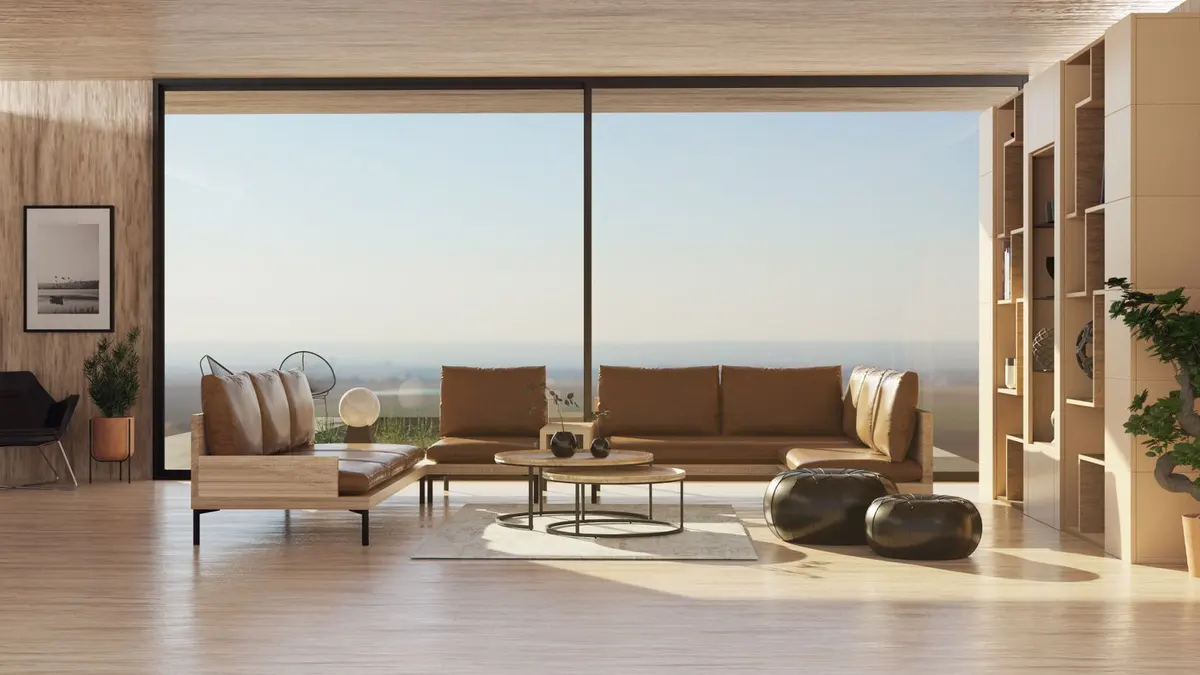
Two apartments can have identical floor plans and feel like different homes, and often the reason is nothing more than which way the windows face. One gets flooded with warm morning light and stays bright and even all day; the other bakes in harsh afternoon glare and feels dim every morning. The difference isn’t luck. It’s geometry — the predictable path the Sun traces across the sky — and once you understand it, you can read a room’s light before you’ve spent a single day in it.
The foundation is a single fact about the Northern Hemisphere: the Sun spends the day in the southern half of the sky. It rises in the east, arcs across the south, and sets in the west, and at midday it’s due south of you, never directly overhead in the continental US. (In summer the rising and setting points swing north of due east and west, so a north window can catch a sliver of direct sun early and late — more on that below, and it’s the one real exception.) Because the Sun favors the south, a south-facing window and a north-facing window live in completely different worlds, and east and west windows each get a single dramatic daily visit.
Getting concrete about direction is easier with the language of sun position — altitude (how high) and azimuth (the compass direction to the Sun). If those terms are new, how to read sun position: solar noon, altitude, and azimuth explained lays out the basics this whole discussion rests on.
South-facing: the most useful light
South-facing windows are the workhorses. Because the Sun is in the southern sky all day, a south window gets direct light from mid-morning to mid-afternoon in every season — the most hours of direct sun of any orientation, and the most consistent.
What makes south light especially manageable is how its angle changes with the seasons. In summer the midday Sun is high overhead, so it enters a south window at a steep angle and doesn’t reach far into the room — and it’s easy to block with a modest overhang, awning, or even the top of the window frame. In winter the Sun stays low in the south even at noon, so its light slants in at a shallow angle and pours deep across the floor, reaching far into the room. This is the single most useful behavior in the whole subject: the summer Sun you want to keep out arrives high, and the winter Sun you want to let in arrives low. A fixed horizontal overhang can be sized to shade the glass in summer and step aside for the winter Sun automatically.
South windows are the best spot for most sun-loving houseplants and the foundation of passive solar heating, discussed below. If you have a choice of which room to spend your time in, a south exposure usually wins.
North-facing: soft, even, and steady
North-facing windows get little or no direct sun for most of the year, precisely because the Sun stays in the south. What they get instead is indirect light — sky light and light bounced off surroundings — which is soft, cool in tone, remarkably even, and almost shadowless. It barely changes through the day.
That’s why north light is prized by painters, photographers, and anyone doing detailed visual work: no harsh glare, no moving hot spots, no squinting into a low sun, just steady illumination. The tradeoff is that north rooms feel cooler and dimmer, and they do little to warm a home. The one exception is high summer, when the Sun rises well north of east and sets well north of west; for a short window near sunrise and sunset, low-angle direct light can slip into a north-facing window. It’s brief, and it’s seasonal, but it’s real.
East-facing: morning sun
East windows catch the Sun as it rises and hold direct light through the morning, then lose it by midday as the Sun swings south and west. The light is warm-toned and comes in at a low angle because the Sun is near the horizon, so it can reach deep into a room early in the day.
This makes east exposures ideal for rooms you use in the morning: a kitchen that’s bright at breakfast, a bedroom for people who want to wake with the light, a breakfast nook. There’s a genuine wellbeing angle here too, since a dose of bright morning light helps anchor your internal clock — the reasoning is laid out in morning light and your body clock. The downside is minor: east rooms go flat and indirect for the whole afternoon, and if you sleep late and hate early light, an east-facing bedroom can be a nuisance without good curtains.
West-facing: hot afternoon and evening sun
West windows are the mirror image of east, and they’re the ones most likely to cause problems. They get no direct sun in the morning, then take the full force of the afternoon and evening Sun as it descends in the west. Because that late Sun is low in the sky, its light comes in almost horizontally — hard to shade with an overhead awning, straight into your eyes, and carrying a lot of heat.
In summer a west-facing room can become the hottest in the house, absorbing hours of low-angle sun right when the day’s air temperature is already peaking. West windows produce serious glare, and the same low, blinding evening light that troubles west rooms is exactly what makes driving westward at sunset dangerous — see sun glare and driving safety for the same geometry on the road. On the positive side, a west window delivers sunset views and beautiful warm evening light, which is prime time for photographers chasing the golden hour. If you love a west exposure, plan on vertical shading — blinds, exterior shades, or shade trees — rather than a horizontal overhang, which can’t block a nearly horizontal Sun.
How season and latitude change the picture
The Sun’s noon height is what ties all of this to where you live. Because Earth’s axis tilts, the midday Sun climbs high in summer and sinks low in winter, and the whole range shifts with latitude. The numbers are worth internalizing:
- In a northern city like Minneapolis, the winter noon Sun sits only about 21 degrees above the horizon. That low winter Sun drives light astonishingly deep into south-facing rooms — and makes south glazing genuinely valuable for winter warmth and brightness.
- In a southern, sun-drenched city like Phoenix, the summer noon Sun climbs to about 80 degrees — nearly straight overhead. At that angle even a small overhang shades a south window completely, and direct sun barely enters south rooms in summer at all.
| Orientation | When it gets direct sun | Character of the light |
|---|---|---|
| South | Mid-morning to mid-afternoon, all seasons | Most consistent; high in summer, deep and low in winter |
| North | Almost none (brief early/late in high summer) | Soft, even, cool, shadowless |
| East | Sunrise through late morning | Warm, low-angle morning light |
| West | Afternoon through sunset | Hot, low, glaring evening light |
Every home sits somewhere between these extremes, and the same window behaves differently in Seattle than in Houston. The pattern holds everywhere; only the sun heights change.
Putting it to work
Houseplants. Match the plant to the window. Sun-lovers — most succulents, cacti, and fruiting plants — want a south or unobstructed west window. East windows suit plants that like bright but gentle light. North windows work for low-light foliage plants that would scorch elsewhere.
Passive solar heating. The principle is to let the low winter Sun in and keep the high summer Sun out. Concentrate glazing on the south side, then use a correctly sized overhang so summer sun is blocked and winter sun is admitted. Materials that absorb and store heat — tile, stone, concrete floors in the sun’s path — soak up that winter warmth and release it after dark.
Overhangs and awnings. The logic follows the Sun’s angle. A horizontal overhang works beautifully on the south side because the summer Sun is high and the winter Sun is low, so a single fixed depth handles both. It fails on the west (and east) side, where the Sun is low and horizontal — there you need vertical shading, shutters, or plantings.
Evaluating an apartment. This is where the payoff is biggest. Before you sign, figure out which way the main windows face — a phone compass takes seconds. Then, if you can, visit at the time of day that orientation matters most: a west-facing living room in late afternoon to judge the glare and heat, an east-facing bedroom in the morning. If you can only see it once, use what you know about the Sun’s azimuth to picture the rest of the day. A south-facing unit seen on a gray morning is still a south-facing unit.
Renters vs. owners. Owners can act structurally — add overhangs, plant shade trees, change glazing, build in thermal mass. Renters work with what they have: heavy curtains and cellular shades for a hot west room, sheer panels to soften a bright south window, and above all choosing the right unit in the first place. For a renter, orientation is one of the few things you lock in on day one and can’t easily fix later, which is exactly why it deserves a careful look before you sign the lease.
The Sun’s path is utterly predictable, which means the light in a home is too. Learn to read the four orientations, remember that the Sun lives in the southern sky and rides low in winter and high in summer, and you can walk into any room and know — without waiting a single day — what its light will do.