Day Length and Your Garden: How Photoperiodism Controls Flowering, Bolting, and Harvests
See what this means where you live
Choose a place and an optional date for sunrise, sunset, golden hour, and twilight. Leave the date blank for today.
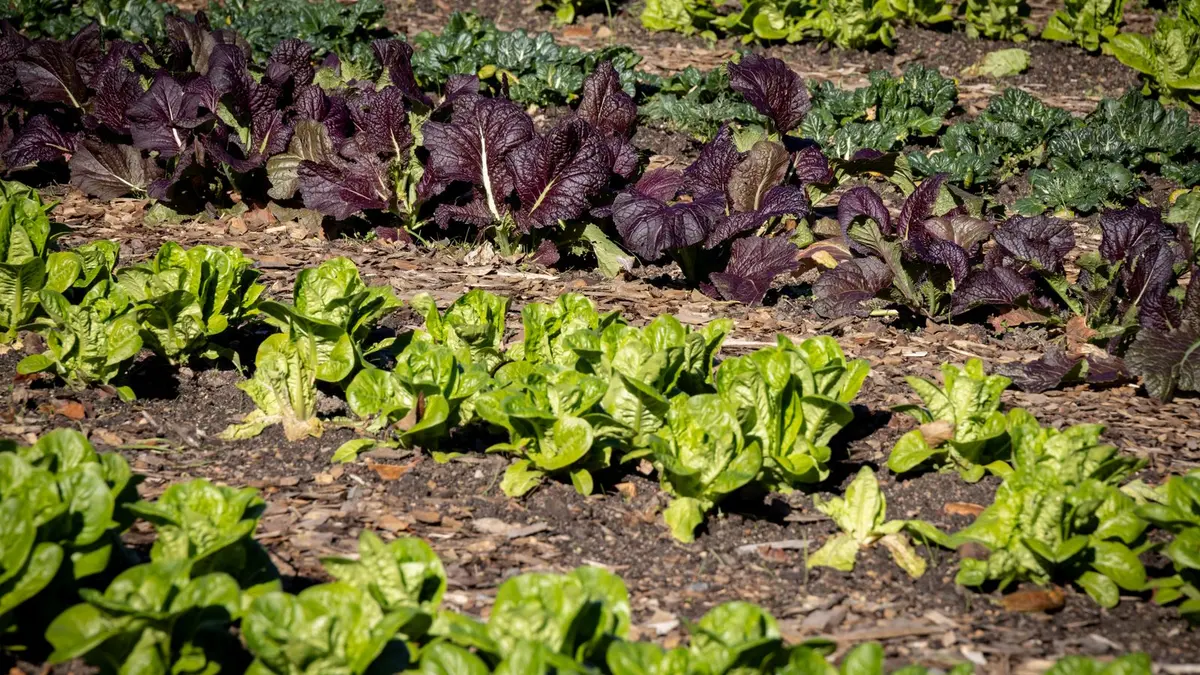
Gardeners who pay attention to the calendar eventually notice something the seed packet doesn’t fully explain: the same variety planted at two different times can behave completely differently. Spinach sown in early spring makes a lush low rosette, then suddenly shoots up a flower stalk and turns bitter in June. An onion that made a fat bulb for a gardener in Georgia stays stubbornly small for one in Minnesota. Fall crops that raced to maturity in September crawl in November even in a mild climate. None of this is random. It’s photoperiodism — the way plants sense the changing length of day and use it to decide when to flower, bulb, or slow down.
The twist that makes photoperiodism click is that plants don’t actually measure daylight. They measure darkness. A pigment in their tissues tracks how long the uninterrupted night lasts, and that reading tells them where they are in the year. Gardeners talk in “day length” because it’s easier and the two are just mirror images of each other, but the underlying clock is a night-length clock. Once you know that, the odd behavior of onions, lettuce, and fall greens turns into something you can plan around.
This matters more in some regions than others, because day length itself swings far more dramatically the farther north you garden. A northern-tier state might see summer days over 15 hours and winter days under 9, while the southern states stay closer to a 14-and-10 spread. That regional difference, mapped out in daylight hours across the United States, is exactly why a variety bred for one latitude can misbehave at another.
How plants measure the night
The sensor is a family of pigments called phytochrome. Phytochrome flips between two forms depending on the light it’s absorbing, and during a long, unbroken night it slowly reverts from one form to the other. The length of that reversion, in effect, times the night. When the dark period crosses a threshold specific to the species and variety, the plant switches its behavior — triggering or withholding flowering.
The key word is unbroken. Even a short flash of light in the middle of the night can reset the clock and make a plant “read” the night as two short nights rather than one long one. Commercial greenhouse growers exploit this constantly: a brief burst of light at midnight can keep short-day plants vegetative out of season, and blackout cloth can trick them into flowering early. Your garden won’t usually see midnight light flashes, but it’s a useful reminder that the plant is genuinely counting darkness, not brightness.
The three photoperiod classes
Plants sort roughly into three groups, named — a little confusingly — by day length even though night length is what’s measured.
Short-day plants flower when nights grow long, meaning late summer and fall. Chrysanthemums and poinsettias are the classic ornamentals; that’s why mums bloom in autumn and why greenhouses use blackout curtains to force poinsettias red for December. Some soybean varieties are short-day too, which historically tied specific varieties to specific latitudes.
Long-day plants flower when nights grow short — late spring and early summer. Spinach, lettuce, dill, and many onions sit here. For a leafy crop this is bad news, because “flowering” means bolting: sending up a seed stalk and abandoning tender leaf growth.
Day-neutral plants ignore photoperiod and flower based on age, size, or temperature instead. Modern tomatoes are the great example — they fruit on their own schedule regardless of day length, which is a big part of why they’re so forgiving to grow. Many modern strawberry varieties have also been bred toward day-neutral behavior so they crop across a long season instead of one photoperiod-triggered flush.
Two things complicate the neat categories. First, temperature often interacts with photoperiod, so a cool spring or a heat wave can nudge the timing. Second, plant breeders have spent decades selecting varieties with different thresholds, so “spinach bolts in long days” is a tendency, not a law — some varieties are bred specifically to resist it.
Onions: the case gardeners get wrong most
Onions are the textbook example of photoperiod mattering in a vegetable bed, because they’re sold in daylength classes and planting the wrong one is a guaranteed disappointment. An onion plant grows leaves until the day length hits its trigger, then it stops making leaves and starts pouring energy into the bulb. Each leaf becomes a ring, so the size of the bulb is set by how many leaves the plant built before bulbing began.
- Long-day onions need about 14 to 16 hours of daylight to bulb. They suit the northern US, where summer days get that long. Plant them in the short-day south and they never receive their trigger properly, or they receive it too late.
- Intermediate-day (or “day-neutral”) onions bulb at roughly 12 to 14 hours and perform across a wide middle band of the country.
- Short-day onions bulb at about 10 to 12 hours. They’re made for the south, where they’re planted in fall or winter and bulb in the lengthening days of early spring — before the days ever reach the long-day threshold.
Plant a short-day onion in Minnesota and it bulbs almost immediately in spring, while it’s still tiny, giving you golf balls. Plant a long-day onion in Georgia and the days never trigger it well, so it sulks. The fix is simply to match the class to your latitude, which means knowing how long your summer days actually get — and that follows the seasonal curve described in how sunrise and sunset times change throughout the year.
Bolting: when long days ruin your greens
For leaf crops, the long-day trigger is the enemy. Spinach and lettuce are prime bolters. As spring days stretch past roughly 13 to 14 hours, long-day species get the signal to reproduce, and a plant you wanted for its leaves suddenly elongates, turns bitter, and goes to seed. Warm temperatures usually accelerate the process, so late-spring heat and lengthening days combine to end the leafy-greens season quickly.
This is why experienced gardeners front-load their cool-season greens into early spring and then again into late summer and fall, dodging the long-day, high-heat window in between. In fall the days are shortening rather than lengthening, so the bolting signal never arrives, and greens hold in good condition far longer. Dill, cilantro, and other herbs prone to bolting behave the same way. If your spring lettuce always bolts before you can eat it, the calendar — not your watering — is usually the culprit.
Fall crops and the Persephone period
The other side of photoperiodism shows up in fall, when days shorten and everything slows. Plants don’t just respond to flowering triggers; their overall growth rate is tied to how much light they receive each day. As daylight drops, photosynthesis drops, and growth stretches out. This is why “days to maturity” on a seed packet — a number usually measured under long summer days — becomes optimistic for fall plantings. A crop rated at 50 days in July might take considerably longer if it’s maturing into October’s shrinking light.
Below about 10 hours of daylight, growth nearly stops altogether. Plants don’t die — many hardy greens sit perfectly happy in the cold — but they essentially pause, waiting for spring. The market gardener Eliot Coleman popularized the term “Persephone period” for this stretch of under-10-hour days, named for the Greek myth of winter’s descent. The practical rule that follows is powerful: to harvest through winter, you need your crops to reach nearly full size before the Persephone period begins, then hold them like produce in a living refrigerator, harvesting as needed. Planting too late means the crop stalls half-grown and won’t finish until the days lengthen again.
When the 10-hour window opens and closes depends entirely on your latitude. In the far north it can span from November well into February; in the southern states it may barely happen at all. This is one of the clearest cases where a gardener genuinely benefits from a daylight calendar for their own location rather than a generic rule.
Using day length to plan by latitude
Pulling it together, the workflow is straightforward. Find out how your local day length moves through the year — when it climbs past the long-day thresholds in spring, and when it falls under 10 hours in late fall. Then line up your plantings against it:
| Goal | What day length is doing | Timing takeaway |
|---|---|---|
| Big onions | Match bulbing trigger to summer max | Pick the daylength class for your latitude |
| Spring greens | Days lengthening toward bolting | Plant early; harvest before ~13–14h |
| Fall greens | Days shortening, no bolt signal | Plant late summer; they hold longer |
| Winter harvest | Under-10h Persephone slowdown | Reach full size before the window opens |
For northern gardeners the long-day and Persephone effects are pronounced; for southern gardeners the short-day onion strategy and a much gentler winter slowdown dominate. Indoor and greenhouse growers, meanwhile, sidestep the whole natural cycle — they set photoperiod with timers and blackout cloth, giving mums their long nights on command or holding spinach in perpetual short days to keep it vegetative.
The single most useful habit is to stop thinking of the growing season as one long window and start thinking of it as a moving light signal. Your plants are counting the nights whether you are or not. Match your seeds to what the day length is actually doing at your latitude, and a lot of frustrating, seemingly random garden failures simply stop happening.