When Is It Truly Dark? A Stargazer's Guide to Astronomical Darkness
Find the light for your next day outdoors
Choose a place and an optional date for sunrise, sunset, golden hour, and twilight. Leave the date blank for today.
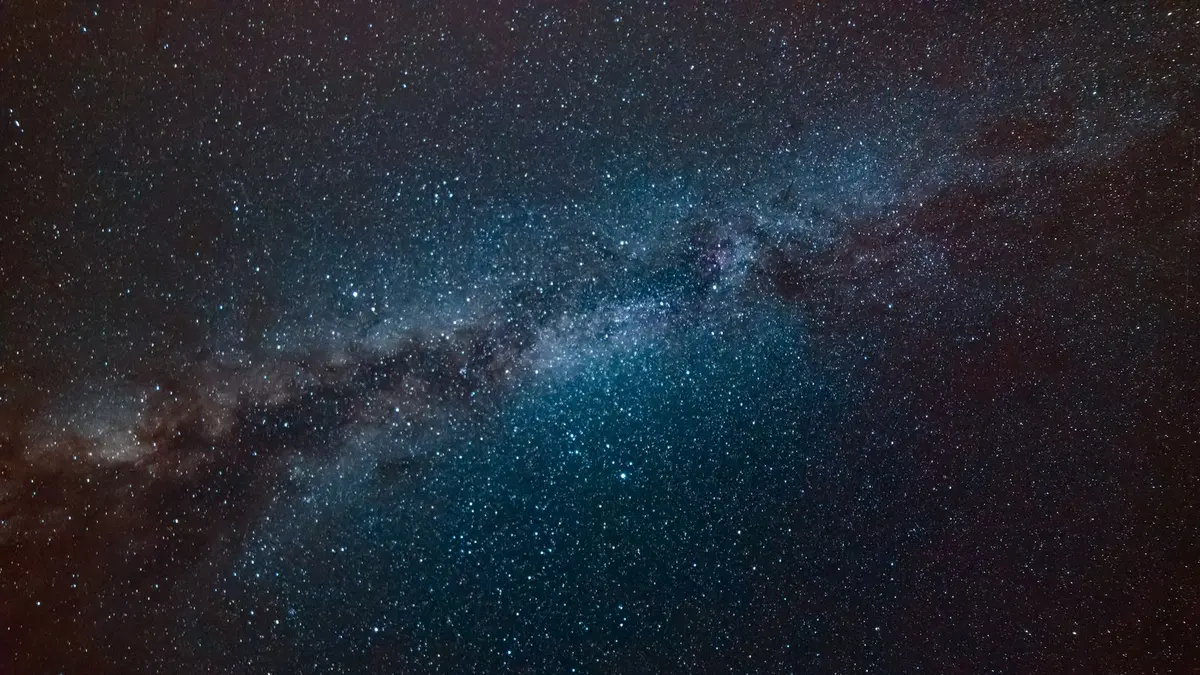
If you’ve ever set up a telescope right after sunset and wondered why the sky looked washed out, you’ve run into the difference between “dark outside” and astronomically dark. For casual purposes, night begins somewhere around the end of civil twilight. For stargazing — especially anything involving faint objects like galaxies, nebulae, or the Milky Way — night doesn’t truly begin until the sun sits at least 18° below the horizon. Depending on where you live and the time of year, that moment can arrive 75 minutes after sunset, two hours after sunset, or, in parts of the northern United States in June, not at all.
This guide covers when true darkness arrives, why it varies so much, and how to combine twilight times with the moon’s schedule to plan a genuinely dark observing session. If you want the full background on how twilight phases are defined, start with our explainer on civil, nautical, and astronomical twilight — here we’ll focus on what those definitions mean in practice for stargazers.
Why 18° Below the Horizon Is the Magic Number
Long after the sun disappears from view, its light keeps scattering through the upper atmosphere and back down toward the ground. That scattered light fades gradually as the sun sinks lower, which is why twilight is divided into phases rather than treated as a single switch.
The 18° threshold — the end of astronomical twilight — marks the point where scattered sunlight no longer contributes measurably to sky brightness. Past 18°, the sky is as dark as the sun will allow. Whatever brightness remains comes from other sources: moonlight, artificial light pollution, natural airglow, and starlight itself.
For stargazing, this threshold acts as a gate:
- Bright targets — the moon, planets, double stars, bright open clusters — tolerate twilight well. You can observe Jupiter during nautical twilight without much penalty.
- Faint, extended targets — galaxies, emission nebulae, the Milky Way’s structure — depend on contrast against the sky background. Even the residual glow of astronomical twilight raises the background enough to erase the faintest detail. These objects need full astronomical darkness, and they’re the reason the 18° figure exists.
- Astrophotography is the strictest case. Long exposures accumulate whatever twilight glow remains, producing gradients across the frame. Imagers typically wait for the end of astronomical twilight before shooting deep-sky targets, and shoot narrowband or calibration frames during twilight instead.
Professional observatories schedule telescope time from the end of evening astronomical twilight to the start of morning astronomical twilight. Amateurs should think the same way: that interval is your usable dark window, and it’s often shorter than you’d expect.
How Long After Sunset Does True Darkness Arrive?
The answer depends on your latitude and the season, because both determine how steeply the sun descends below the horizon.
Mid-latitudes: roughly 90 minutes, more in summer
Across most of the continental US (roughly 30–45°N), the full run from sunset to the end of astronomical twilight takes about 75–100 minutes. Around the equinoxes, the sun crosses the horizon at a relatively steep angle and darkness comes closer to the fast end of that range. Near the June solstice, the sun’s path is shallower, stretching every twilight phase — expect to wait toward two hours in the northern half of that band.
A practical rule of thumb for most of the country: add about an hour and a half to the sunset time, then verify against the actual astronomical twilight end for your city. In summer, that combination of late sunsets and long twilight means true darkness may not arrive until 10:30 or 11:00 p.m. — worth knowing before you drive an hour to a dark site on a work night.
Low latitudes: the fastest darkness in the US
The farther south you are, the more steeply the sun drops. In southern Florida, southern Texas, and Hawaii, twilight runs shorter and varies less across the year. Darkness arriving 75–85 minutes after sunset year-round is one of the underrated perks of low-latitude observing.
High latitudes: long twilights, and sometimes no darkness at all
North of about 45°N, summer twilight stretches dramatically. And there’s a hard geometric limit: at the June solstice, the sun’s lowest point below the horizon equals your latitude plus the Earth’s axial tilt (23.4°) minus 90°. Above roughly 48.5°N, that works out to less than 18° — meaning the sun never gets deep enough below the horizon for astronomical twilight to end.
In practice, for cities along the northern border — Seattle, northern Montana, North Dakota, northern Minnesota — there is a stretch of several weeks around the June solstice with no astronomical darkness at all. The sky spends the entire night in some stage of twilight. Even a bit south of that line, in places like Bozeman, Montana at about 45.7°N, astronomical darkness still arrives in midsummer but shrinks to a short window in the small hours.
This is why serious deep-sky observers at northern latitudes treat late June as maintenance season and concentrate their galaxy hunting in spring and fall.
The Moon: The Other Half of the Darkness Equation
Astronomical twilight tells you when the sun stops brightening the sky. It says nothing about the moon — and a full moon is bright enough to wash out the Milky Way even from an otherwise pristine site. For faint-object observing, the moon’s phase and its rise/set times matter just as much as twilight.
Phase matters, but so does timing
“Observe near new moon” is good advice, but incomplete. What actually matters is whether the moon is above the horizon during your dark window:
- New moon (and a few nights on either side): the moon is near the sun in the sky, rising and setting roughly with it. The entire night is moon-free. This is the prime window each month.
- Waxing crescent to first quarter: the moon is up in the evening but sets before or around midnight. Early-evening sessions are compromised; the second half of the night is dark.
- Full moon: up essentially all night. Deep-sky observing is off the table; this is the week for lunar and planetary targets.
- Waning phases: the mirror image — the moon rises late, so the evening hours are dark even a week or more after full moon. Many observers overlook how good waning-gibbous evenings can be if the moon rises after midnight and you finish before it clears the horizon.
Because the moon rises on average about 50 minutes later each night, the boundaries of the moon-free hours shift noticeably from one night to the next. Checking moonrise and moonset for your specific date is as important as checking twilight times.
Light Pollution and the Bortle Scale
Even with the sun 18° down and the moon below the horizon, your sky is only as dark as your surroundings allow. Artificial skyglow from cities sets a floor on sky brightness that no amount of waiting can fix.
The Bortle scale, introduced by amateur astronomer John Bortle in 2001, is the standard shorthand for rating this. It runs from Class 1 to Class 9:
- Class 1–2: truly dark sites — the Milky Way casts visible structure, and light domes from distant cities are minimal or absent. In the US these are mostly found in the desert Southwest, the northern Rockies and Plains, and other remote areas.
- Class 3–4: rural and rural/suburban transition skies. The Milky Way is clearly visible, though light domes sit on the horizon. This is realistic “within an hour’s drive” territory for many Americans.
- Class 5–7: suburban to bright suburban skies. The Milky Way ranges from faint to invisible; only brighter deep-sky objects punch through.
- Class 8–9: city and inner-city skies, where only the moon, planets, and a handful of bright stars survive.
The interplay with twilight is worth understanding: under a Class 8 city sky, the difference between nautical twilight and full astronomical darkness is barely perceptible, because artificial skyglow dominates either way. Under a Class 2 sky, the end of astronomical twilight is obvious — the sky background visibly deepens and faint structure emerges. The darker your site, the more the 18° threshold matters.
Some communities have taken darkness seriously as policy. Flagstaff, Arizona — home to Lowell Observatory — pioneered outdoor lighting ordinances and was named the world’s first International Dark Sky City in 2001. It’s proof that a real city can coexist with a sky dark enough for research astronomy, and it makes northern Arizona one of the most accessible dark-sky regions in the country.
Putting It Together: Planning a Dark-Sky Session
A genuinely dark observing session requires three things to line up — solar darkness, lunar darkness, and a dark site. Here’s the practical sequence:
- Find your dark window for the date. Look up the end of evening astronomical twilight and the start of morning astronomical twilight for your location. The interval between them is your maximum observing time. Every city page on this site lists all three twilight phases alongside sunrise and sunset.
- Overlay the moon. Check moonrise and moonset. Your effective dark window is the overlap between astronomical night and moon-below-horizon time. Around new moon, they’re the same; near quarter phases, one half of the night wins.
- Aim for the new-moon window. The roughly ten-day stretch centered on new moon offers the most moon-free dark hours. Serious observers plan monthly around it — it’s why star parties are almost always scheduled on new-moon weekends.
- Mind the season at your latitude. At 40°N, a July session means waiting until nearly 11 p.m. for true darkness. At 48°N in late June, it means there is no true darkness to wait for. Spring and fall often give the best balance of reasonable hours and long nights.
- Choose the darkest site you can reach. Dropping even one or two Bortle classes does more for faint objects than any equipment upgrade.
Let Your Eyes Catch Up: Dark Adaptation
One last factor is biological rather than astronomical. Your eyes take time to reach full sensitivity in darkness. The pupils dilate within seconds, but the real gain comes from a chemical change in the retina’s rod cells, which takes far longer — most people reach substantially full dark adaptation after 20 to 30 minutes without exposure to bright light.
Two practical consequences:
- Arrive early and stay dark. Get to your site before astronomical twilight ends and let your adaptation build as the sky darkens. One glance at a phone screen at full brightness can undo much of that progress in an instant.
- Use red light. The rods that provide night vision are relatively insensitive to deep red light, which is why astronomers use dim red flashlights and red-screen modes for charts. Keep it dim — a bright red light still hurts adaptation, just less than white light does.
Combine a well-timed dark window, a moonless sky, a dark site, and adapted eyes, and even a modest telescope — or no telescope at all — will show you a sky most people have never actually seen. The information you need to plan it is all in the twilight and moon data for your location; the sky handles the rest.