Solstices and Equinoxes: What They Are, Why the Dates Move, and When the Next Ones Fall
See what this means where you live
Choose a place and an optional date for sunrise, sunset, golden hour, and twilight. Leave the date blank for today.
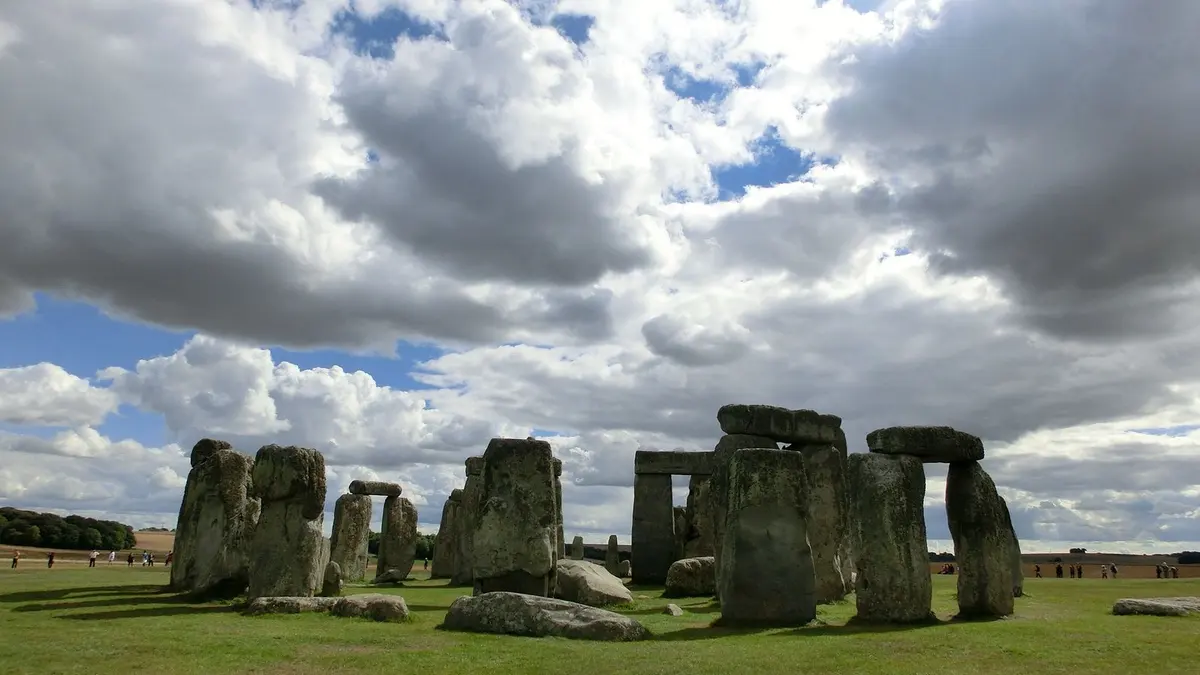
Ask most people when summer starts and you’ll hear “June 21st.” Ask again next year and the honest answer might be June 20th. The solstices and equinoxes feel like fixed calendar landmarks, but they drift around by a day or two, they aren’t actually days at all, and the most famous “fact” about them — that day and night are exactly equal on the equinox — isn’t quite true. This article pins down what these four events really are, why their dates wobble, and when the next ones fall.
What a Solstice Actually Is
A solstice is defined by the sun’s declination — its angular position north or south of the celestial equator, the projection of Earth’s equator onto the sky. Over the course of a year, as Earth moves around its orbit with its axis tilted about 23.44°, the sun’s declination swings between roughly +23.44° (its farthest north) and −23.44° (its farthest south).
The June solstice is the instant the sun’s declination reaches its northernmost extreme. The December solstice is the instant it reaches its southernmost extreme. That’s the entire definition. Everything else — longest day, shortest day, highest or lowest midday sun — follows as a consequence, and which consequence you get depends on your hemisphere. The June solstice is the longest day in the Northern Hemisphere and the shortest in the Southern.
The word itself captures the geometry: solstice comes from the Latin sol (sun) and sistere (to stand still). Around the solstice, the sun’s declination is at a turning point and barely changes from day to day. This is why the sun’s rising and setting positions on the horizon seem frozen in place for a week or two, and why daylight length changes by less than a minute per day near the solstices — something we cover in more depth in how sunrise and sunset times change throughout the year.
What an Equinox Actually Is
An equinox is the instant the center of the sun crosses the celestial equator — the moment its declination passes through exactly 0°. At the March equinox the sun is heading north; at the September equinox it’s heading south.
Two things are worth emphasizing:
- It’s an instant, not a day. The equinox is a single moment in time, the same moment everywhere on Earth. When people say “the equinox is March 20th,” they mean the instant falls within March 20th on their calendar. Depending on your timezone, that same instant can land on a different calendar date — an equinox that occurs late in the evening in Europe may still be the previous afternoon in California.
- The definition says nothing about daylight. The famous “equal day and night” is an approximation, and as we’ll see below, it’s off by several minutes everywhere.
The same “instant, not a day” logic applies to solstices. All four events are precise moments defined by the geometry of the sun’s position, and astronomers can compute them to the second. Calendars just round them to the nearest date.
Why the Dates Wobble Between the 19th and 23rd
The tropical year — the time from one March equinox to the next — is about 365.2422 days. Our calendar year is either 365 or 366 days. That mismatch of roughly a quarter of a day is the entire reason the dates move.
Here’s the mechanism. In a common (non-leap) year, each equinox and solstice arrives about 5 hours and 49 minutes later on the clock than it did the year before, because the calendar is about a quarter-day short of the true year. Do that for three consecutive years and the event has slipped nearly 18 hours later — sometimes enough to push it onto the next calendar date. Then a leap year inserts February 29th, which yanks every subsequent event about 18 hours earlier (24 hours of extra calendar minus the ~6 hours of natural drift), often pulling the date back a day.
The result is a sawtooth pattern: three years of gradual slippage later, then a jump back earlier. Layered on top of that is the Gregorian calendar’s century rule — years divisible by 100 skip the leap day unless they’re divisible by 400 — which produces a slow drift across each century. That’s why the March equinox can fall on March 19, 20, or 21 depending on the year and where you are on the leap-year cycle, and why the December solstice migrates between December 20 and 23 over long spans. In our current era, most events cluster tightly: March 19–20, June 20–21, September 22–23, and December 21–22 cover nearly all cases.
The wobble is confined to a window of a few days. The Gregorian calendar was designed precisely so that the equinox never drifts far from March 20–21 — that was the whole point of the 1582 reform, which existed to keep Easter’s calculation anchored to the spring equinox.
Upcoming Solstices and Equinoxes
Here are the calendar dates for the next two years of events. One caveat applies to every row: each event is a single instant, and the calendar date it falls on depends on your timezone. The dates below are correct for most of the world, but if the instant occurs close to midnight, locations far to the east or west may see it land a day earlier or later on their local calendar.
| Event | 2026 | 2027 |
|---|---|---|
| March equinox | March 20 | March 20 |
| June solstice | June 21 | June 21 |
| September equinox | September 23 | September 23 |
| December solstice | December 21 | December 22 |
Note the December solstice shifting from the 21st in 2026 to the 22nd in 2027 — that’s the sawtooth drift described above, playing out in real time.
The Equinox Myth: Why Day and Night Aren’t Exactly Equal
The word equinox comes from the Latin for “equal night,” and geometrically the name is fair: at the equinox instant, the sun sits on the celestial equator, and the terminator — the line dividing day from night — passes through both poles. In a purely geometric world, every point on Earth would get exactly 12 hours of daylight.
But sunrise and sunset aren’t defined geometrically. They’re defined by what you actually see, and two effects tip the balance toward daylight:
Atmospheric Refraction
The atmosphere bends light, lifting the sun’s apparent position near the horizon by roughly 0.57° — more than the sun’s own apparent width. You see the sun before it has geometrically risen and continue to see it after it has geometrically set.
The Sun Is a Disk, Not a Point
Sunrise is conventionally timed from the moment the sun’s upper edge appears, and sunset from the moment its upper edge disappears — not from the center of the disk crossing the horizon. Since the sun’s disk spans about half a degree, this adds daylight at both ends of the day.
Together, these effects make the day on the equinox several minutes longer than 12 hours everywhere on Earth — typically around 7 minutes at mid-latitudes, more at higher latitudes where the sun crosses the horizon at a shallower angle and spends longer in the refraction zone.
The Equilux
If you want the date when daylight actually equals 12 hours, you’re looking for the equilux — and it doesn’t coincide with the equinox. In the Northern Hemisphere, the equilux falls a few days before the March equinox and a few days after the September equinox, because the sun needs to sit slightly below the celestial equator for the refraction-and-disk bonus to be exactly cancelled out. The precise date depends on your latitude: closer to the equator the offset stretches to a week or more, while at mid-latitudes it’s typically three or four days. Unlike the equinox, the equilux isn’t a global instant at all — it’s a local, latitude-dependent date.
Cross-Quarter Days: The Forgotten Midpoints
The solstices and equinoxes divide the year into four quarters, but traditional calendars also marked the midpoints between them — the cross-quarter days. They fall in early February, early May, early August, and early November, and several survive in modern culture:
- Early February — Imbolc in the Celtic calendar; Groundhog Day in North America, which is essentially a folk observation that winter is half over.
- Early May — Beltane, or May Day.
- Early August — Lughnasadh or Lammas, the traditional start of harvest.
- Early November — Samhain, the root of Halloween and All Saints’ Day.
Cross-quarter days are a useful reminder that the astronomical seasons and the felt seasons don’t line up. The solstice is the extreme of daylight, but not of temperature — the warmest and coldest stretches of the year lag the solstices by several weeks because land and oceans take time to heat up and cool down. Many traditional cultures treated the cross-quarter days, not the solstices, as the season boundaries, which arguably matches the weather better.
Solstices vs. Earliest and Latest Sunsets
One final clarification, because it trips people up every year: the December solstice is the shortest day, but it is not the day of the earliest sunset — that happens roughly two weeks earlier at mid-northern latitudes, with the latest sunrise following in early January. Likewise, the June solstice is the longest day, but the latest sunset comes several days after it and the earliest sunrise several days before.
The culprit is the equation of time — the drift of solar noon against clock noon caused by Earth’s elliptical orbit and axial tilt. The solstice fixes the length of the day; the equation of time slides the midpoint of that day around the clock, dragging sunrise and sunset with it. We unpack the full mechanism in why the latest sunset isn’t on the longest day.
The Takeaway
Solstices and equinoxes are exact astronomical instants — the sun’s declination hitting its extremes, or crossing zero — that our calendar can only approximate with dates. The dates wobble because 365.2422 doesn’t divide evenly into calendar years; the “equal day and night” is off by several minutes thanks to refraction and the width of the sun’s disk; and the extremes of daylight don’t coincide with the extremes of sunrise and sunset times. If you want to watch these effects play out for your own city, check your daily times on todaysuntimes.com in the weeks around each event — the slow-motion turnaround near a solstice and the rapid daily shifts near an equinox are easy to see once you know to look.