How Daylight Saving Time Changes Your Sunrise and Sunset
See what this means where you live
Choose a place and an optional date for sunrise, sunset, golden hour, and twilight. Leave the date blank for today.
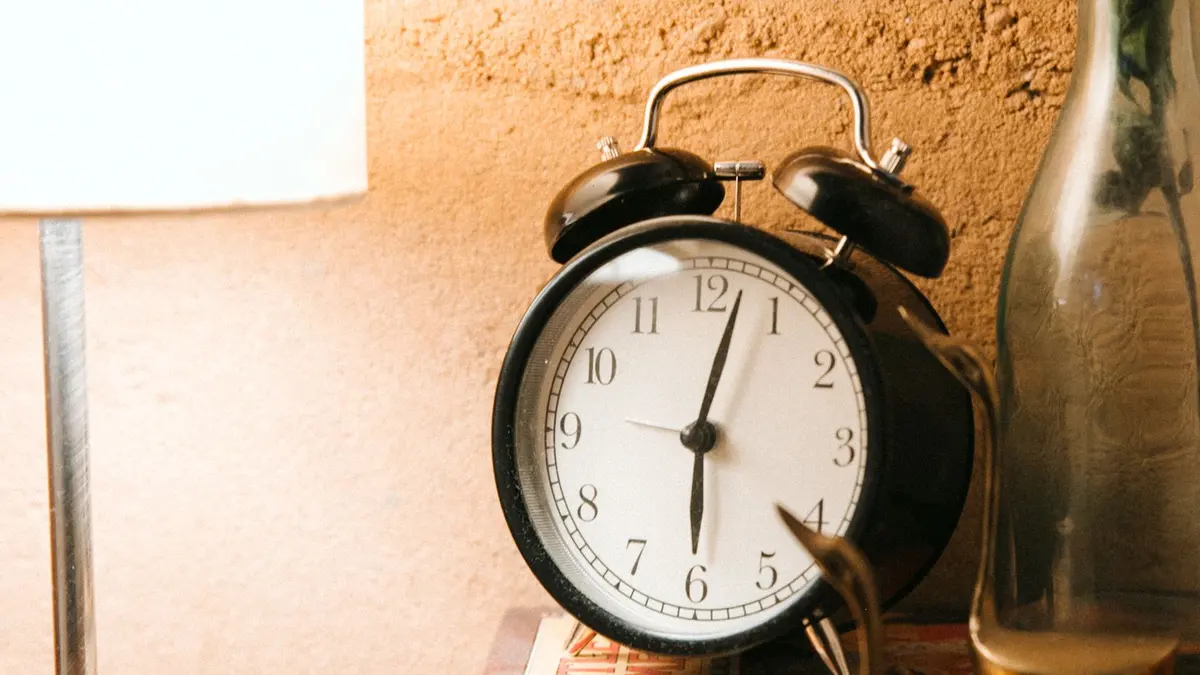
Twice a year, most of the United States moves its clocks by an hour — and overnight, the numbers you see for sunrise and sunset jump by a full 60 minutes. Nothing about the sun actually changes. What changes is the label we put on the moment it crosses the horizon. Understanding that difference makes the whole ritual of “spring forward, fall back” a lot less confusing, and it explains why your evenings suddenly feel longer or your mornings suddenly go dark.
What Daylight Saving Time Actually Does
Daylight Saving Time (DST) doesn’t add daylight. The Earth keeps spinning at the same rate, and any given city still receives exactly as many hours of sunlight as it would have otherwise. DST simply shifts the clock relative to the sun so that more of that daylight lands in the evening, when most people are awake and active.
In the United States, DST begins on the second Sunday in March, when clocks move forward one hour (“spring forward”), and ends on the first Sunday in November, when clocks move back one hour (“fall back”). The change happens at 2:00 a.m. local time, which is why most people experience it as simply waking up to a different clock.
Because the clock jumps but the sun does not, every sunrise and sunset time printed on a calendar shifts by an hour on the changeover day:
- Spring forward (March): Sunrise and sunset both move one hour later on the clock. A 6:30 a.m. sunrise becomes 7:30 a.m.; a 6:00 p.m. sunset becomes 7:00 p.m.
- Fall back (November): Sunrise and sunset both move one hour earlier. That 7:00 a.m. sunrise becomes 6:00 a.m., and evening darkness arrives an hour sooner.
Why the Sunrise and Sunset Numbers Jump
It helps to separate two ideas: solar time and clock time.
Solar time is defined by the sun itself. Solar noon is the moment the sun reaches its highest point in the sky, and sunrise and sunset are fixed by your latitude, longitude, and the date. These moments drift by only a minute or two from one day to the next as the seasons change.
Clock time is a human convention layered on top. Time zones already offset your clock from true solar time, and DST adds another one-hour offset for part of the year. So when you look up “sunset in Chicago,” you’re really seeing the solar event translated into whatever clock rule is in effect that day.
On the morning of a DST change, the sun does exactly what it did the day before — but the clock it’s measured against has moved. That’s the entire reason the printed times leap by an hour while the actual pace of the sky stays smooth and gradual. On todaysuntimes.com, the times shown for each city already account for the active clock rule, so what you see is the real local clock time for that date.
The Real-World Effects
Darker Mornings, Longer Evenings — Then the Reverse
After the March change, sunset lands later on the clock, giving you bright, usable evenings for after-work walks, sports, and errands. The trade-off is darker mornings: for a few weeks, sunrise can slip back past 7:00 or even 7:30 a.m. in northern cities, so commutes and school runs begin in the dark.
November flips it. Sunrise returns to earlier, brighter clock times, but sunset can arrive before 5:00 p.m. in much of the country, and the sudden early darkness is what many people notice most.
The Effect Is Bigger in the North
DST shifts every city’s clock by the same hour, but how dramatic it feels depends on latitude. Northern cities like Seattle, Minneapolis, and Boston already swing widely between short winter days and long summer ones, so a one-hour clock shift stacked on top of that seasonal change is very noticeable. Closer to the equator — think Miami or Honolulu (which doesn’t observe DST at all) — daylight is more even year-round, and the shift feels milder.
Your Body Notices
Even a single hour can nudge your internal clock. Sleep researchers consistently find a short-lived rise in grogginess, and even in traffic incidents, in the days after the spring change, as people adjust to waking an hour earlier relative to the sun. The fall change is usually gentler because you gain an hour of sleep. Using accurate sunrise times to get morning light — the strongest signal for resetting your body clock — can ease the transition.
Who Doesn’t Change Their Clocks
Not everyone participates. Hawaii and most of Arizona (excluding the Navajo Nation) stay on standard time all year, along with several U.S. territories. For these places, sunrise and sunset times never take the seasonal one-hour jump — a useful thing to remember if you’re comparing a city in Arizona to one in a neighboring state during the summer, because their clocks can be an hour apart even when their solar time is nearly identical.
Planning Around the Change
The two changeover weekends are worth marking on your calendar, especially if your routine depends on daylight:
- Photographers: Golden hour and blue hour move by a full hour on the clock overnight. Re-check your shoot times right after each change so you don’t arrive an hour early or late.
- Runners, cyclists, and dog walkers: After the November change, evening light disappears fast. Shift outdoor sessions earlier or plan for lights and reflective gear.
- Travelers: If you’re crossing between a DST-observing state and Arizona or Hawaii, double-check local times rather than assuming a fixed offset.
- Early risers: After spring forward, that early-morning light you relied on will be gone for a few weeks. Adjust wake times gradually in the days beforehand.
The simplest way to stay ahead of it is to check the exact sunrise and sunset times for your city on the dates around each change. Search for your location on todaysuntimes.com to see the current sunrise, sunset, golden hour, and twilight times — already adjusted for whichever clock rule is in effect.
Quick Reference
| Spring Forward | Fall Back | |
|---|---|---|
| When | Second Sunday in March | First Sunday in November |
| Clock moves | Forward 1 hour (2 → 3 a.m.) | Back 1 hour (2 → 1 a.m.) |
| Sunrise time | 1 hour later | 1 hour earlier |
| Sunset time | 1 hour later | 1 hour earlier |
| You notice | Darker mornings, bright evenings | Bright mornings, early dark |
| Sleep effect | Lose an hour — harder | Gain an hour — easier |
Daylight Saving Time is ultimately a bookkeeping trick: the sun’s schedule never changes, only the clock we hold up against it. Once you see the seasonal one-hour jump for what it is — a relabeling, not a real shift in the sky — the sunrise and sunset numbers stop being surprising and start being useful for planning your day around the light you actually get.