Blue Hour: A Practical Guide to the Other Magic Light
Plan the light for your shoot
Choose a place and an optional date for sunrise, sunset, golden hour, and twilight. Leave the date blank for today.
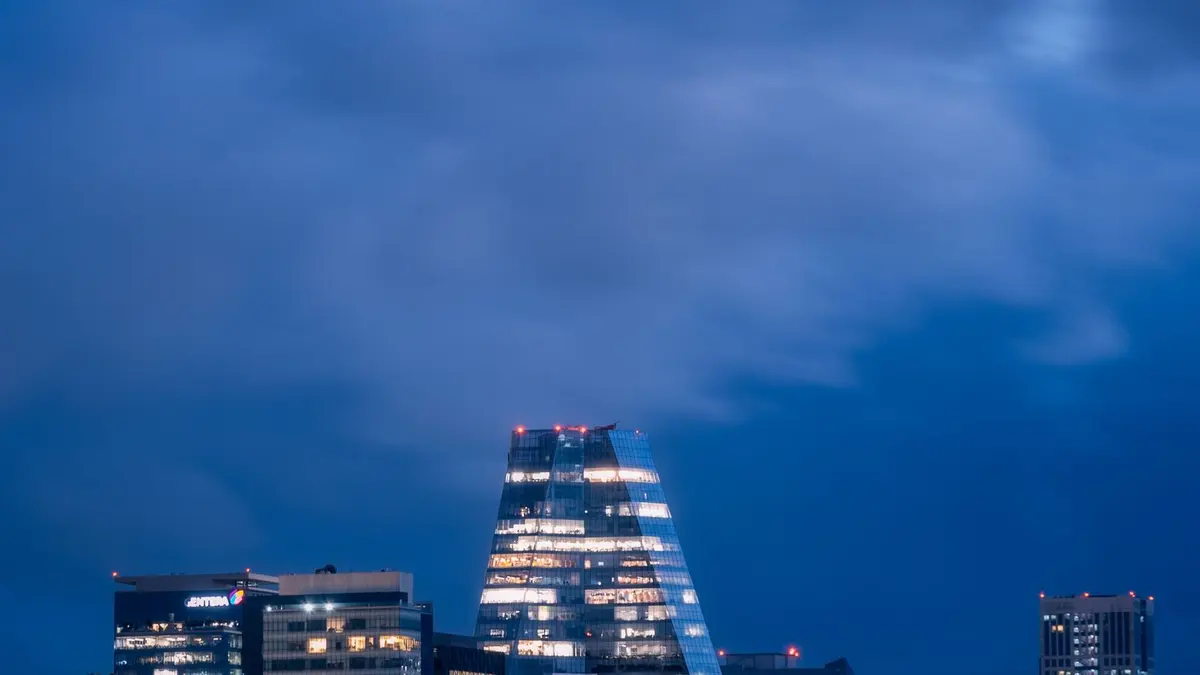
Golden hour gets all the attention, but ask a seasoned cityscape or architecture photographer when they actually press the shutter and many will say blue hour — the short window of deep, even, blue light that comes just before sunrise and just after sunset. It’s the light that makes a skyline glow, balances streetlights against the sky, and turns an ordinary street into something cinematic. It’s also brief, easy to miss, and worth planning around.
What blue hour is
Blue hour is the period when the Sun sits a little way below the horizon — 4 to 6 degrees down in this site’s calculator — and the sky takes on a rich, saturated blue rather than the warm oranges of golden hour or the black of full night. In the evening it begins after the Sun has set, once golden hour has faded; in the morning it comes before golden hour, ending as the Sun approaches the horizon.
It overlaps with civil twilight (the Sun 0–6 degrees below the horizon), but photographers usually mean the deeper, more color-saturated part of that window. The exact timing depends on your latitude and the season, but the 4–6° window can be brief. Select your location and date in the planner for its actual duration. Other photography guides use wider boundaries, such as 4–8°; blue hour is a photographic convention, not a separate astronomical twilight phase.
Why the sky turns blue
During the day, sunlight passes through a relatively short slice of atmosphere and the sky reads as pale blue. At sunrise and sunset the light travels through much more air, scattering away the blue and leaving the warm reds and oranges of golden hour. Blue hour is the transition between the two.
Once the Sun drops below the horizon, direct warm light no longer reaches you. What’s left is sunlight scattered and bent through the upper atmosphere — and that remaining light is dominated by shorter, bluer wavelengths, partly because of a molecule called ozone high in the atmosphere that preferentially absorbs the leftover reds. The result is a sky that’s not just dark but genuinely, deeply blue, and remarkably even from horizon to zenith. That evenness is the secret: there are no harsh highlights or deep shadows, so everything is lit softly and equally.
Why photographers love it
The magic of blue hour is a matter of balance. During the day, a lit window or a streetlamp is invisible against a bright sky. At night, the same light is a hot dot against pure black, impossible to expose alongside the surrounding scene. But during blue hour the sky’s brightness sits at almost exactly the level of artificial light — so lit windows, neon signs, car trails, and streetlamps all balance beautifully against a sky that still holds color. This is why:
- Cityscapes taken at blue hour look alive: the buildings glow from within while the sky stays luminous rather than black.
- Architecture shot in blue hour separates cleanly from the background, with even light that flatters detail.
- Landscapes with water pick up the blue sky as a mirror, doubling the effect.
How to shoot it well
Blue hour is dim and getting dimmer (or brighter, in the morning), so a few things matter more than usual:
- Use a tripod. Exposures during blue hour run from a fraction of a second to several seconds. Handholding will not keep things sharp. A tripod also lets you keep ISO low for clean, noise-free files.
- Arrive early and stay late. The best few minutes come and go quickly, and the light changes continuously. Be set up before it starts and keep shooting after you think it’s over — evening blue hour deepens toward night, and the exact minute that works best is hard to predict.
- Shoot in RAW and watch white balance. Blue hour’s color is the point, but your camera’s auto white balance may try to “correct” the blue away. Shooting RAW lets you dial the mood back in afterward. Many photographers set a slightly cool white balance to lean into the effect.
- Bracket your exposures. The gap between the bright sky and the darker foreground can still be wide. Taking several exposures and blending them, or using a graduated approach, keeps both ends in range.
- Look for artificial light. Blue hour without any lights is just a dim blue scene. The payoff comes from the interplay between the sky and lit windows, lamps, or signs — so frame with those in mind.
Golden hour or blue hour?
They’re complementary, not competing. A simple way to think about it:
- Golden hour is for warmth, texture, and shape — portraits, landscapes, anything you want to feel warm and three-dimensional, lit by long, low, directional light.
- Blue hour is for mood and balance — skylines, architecture, interiors, and any scene where artificial light plays against the sky.
The good news is you don’t have to choose. On a clear evening they run back to back: golden hour, then a brief handoff at sunset, then blue hour. Set up before golden hour, shoot straight through the transition, and you get both in a single session. The city pages on this site list today’s golden hour and blue hour windows from representative city-center coordinates — a useful planning baseline to refine for your shoot location and horizon.